How to Display Open-Back Watches: Making the Movement the Star of the Counter背透腕表怎么陈列:让机芯成为柜台里的主角
Walk into a watch counter these days and a subtle shift is under way: more customers no longer stop at the front dial. They ask the staff to turn the watch over and peer through the sapphire crystal at the back. Open-back, half-skeleton and fully skeletonized designs have moved the movement out of its case and turned it into a mechanical landscape worth admiring. The balance wheel beats steadily, the hairspring breathes, and a bevel on a bridge catches the light for an instant — exactly the details a fine watch spends its craft budget on. Yet many counters still lay every open-back watch flat, face up, hiding the most captivating part in plain sight.
A thoughtful jewelry arrangement is no mere listing; it guides the gaze through spacing and rhythm.
The first step to making the movement the star is giving it the right angle. An open-back watch keeps its beauty on the reverse, and if the dial always faces up, a customer must pick the piece up and flip it before seeing anything — raise that barrier and most simply give up. A smarter approach uses a tilted watch display stand that holds the case in a gentle recline, so the dial and the exhibition caseback enter the view together: the time is readable and the balance wheel is visible at a glance. An angle of roughly twenty to thirty degrees feels most natural — too steep looks staged, too flat reveals little. When restocking, staff can quietly turn the caseback toward the flow of foot traffic; that one small move earns an extra second of attention from passers-by.
From leather to velvet, the material of a jewelry case shapes the first impression before a piece is worn.
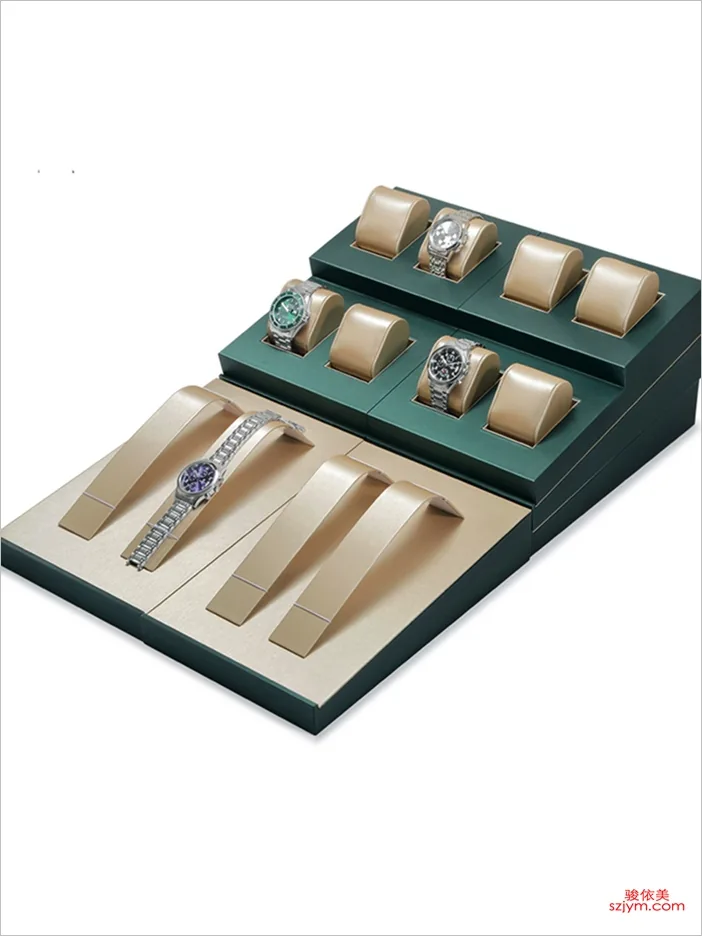
The second step is lighting it properly. Sapphire crystal is clear but reflective; catch it at the wrong angle and a pale wash of light blots out the movement's texture. The safe method is angled, anti-glare lighting that grazes the glass rather than striking it head-on, plus a touch of dark background beneath the movement so the bridges' metallic character is lifted by contrast. Keep the color temperature on the warmer side, since warm white flatters the brass plating. The aim is not to make the back as bright as possible but to let the eye read those finished layers.
A well-partitioned jewelry tray keeps rings, earrings and necklaces in place without tangling.
The third step is giving the customer a reason to care. However precise the balance wheel, without guidance most people will stare for three seconds and conclude there is “something in there.” Place a small card beside the watch display prop listing the caliber, beat rate and power reserve, and pointing out which bridge carries a bevel or which jewel bearing does the key work. Staff can shift the line from “this is a handsome watch” to “look at the finishing on that balance” — turning looking into a shared explanation. Once the movement's story is told, the watch stops being a mere accessory and becomes something a customer will pay for craft.
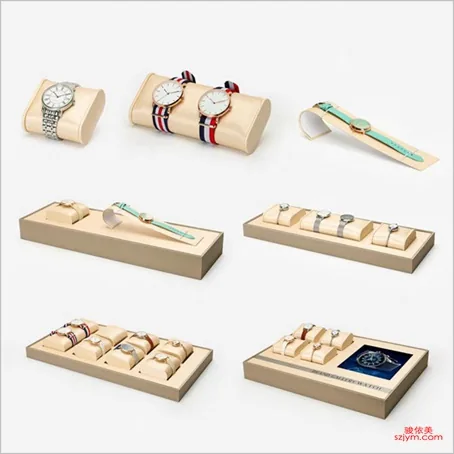
A minimalist jewelry display stand works as the hero of photography and streaming, letting the product speak.
Open-back pieces also ask for more care. A see-through caseback means the movement is more exposed to moisture and dust, so replace the desiccant in the case regularly and wipe the glass with a soft, lint-free cloth to avoid scratches. During long displays, do not leave the watch in one fixed posture forever; turn it occasionally so the movement rests at different angles — even wear and a touch of attentiveness. Such small acts never appear on the price tag, yet they decide whether that clear view through the glass stays bright over time.
In the end, displaying an open-back watch is about turning “can be seen” into “can be understood.” When angle, light and explanation work together, the movement stops being a component and becomes a star that speaks from the counter.
This article is original content by Junyimei. All rights reserved; please credit the source if reprinted.
骏依美珠宝包装定制,懂设计更懂省料,让每一分预算花在刀刃上,体面实用真省心。
这两年走进腕表柜台,越来越多顾客不再只看正面表盘,而是请店员把表翻过来,隔着蓝宝石玻璃看个仔细。背透、半透与镂空设计走红,让机芯从藏在壳里的零件,变成值得欣赏的机械风景:摆轮摆动、游丝收放、夹板倒角在光里一闪,正是高端腕表愿意花工费的地方。可很多柜台仍把背透表正面朝上平放,等于把最动人的部分藏了起来。
讲究的首饰摆盘并非简单罗列,而是通过疏密与节奏引导顾客的视线停留。
要让机芯成为主角,第一步是给个合适角度。背透表的精彩全在背面,若一律表盘向上,顾客得拿起表翻过去才看得见,门槛一高多数人就放弃了。更聪明的做法是借助倾斜的手表陈列架,让表体微微仰起,表盘与背透同时进入视线:既读到时间,又瞥见摆轮。角度以二三十度最自然,太陡刻意,太平看不清背面。补货时顺手把背透面朝向客流动线,就能让路人多停两秒。
从皮质到绒布,首饰盒的材质选择直接决定了饰品佩戴前的第一印象。
第二步是把光打对。蓝宝石玻璃通透却反光,射灯角度稍偏,就在背透面糊一层白光斑,把机芯纹路全盖住。稳妥办法是用带防眩的角度斜打,让光擦着玻璃掠过;同时在机芯下方留一点暗背景,用明暗对比把夹板的金属质感托出来。色温不宜过冷,暖白更显黄铜镀层的温润。打光不是越亮越好,而是让打磨过的层次被眼睛读出来。
一块分区合理的珠宝托盘,可以让戒指、耳环与项链各归其位、互不缠绕。
第三步是给机芯一个被讲述的理由。再精密的摆轮,若无人指点,顾客看三秒也只觉得“里面有点东西”。可在手表展示道具旁放一张小说明卡,写清机芯型号、摆频与动力储存,标出哪枚夹板做了倒角、哪颗宝石轴承起关键作用。导购把话术从“这块表好看”换成“您看这个摆轮的打磨”,观看就变成可参与的解释。故事一讲开,腕表便成了顾客愿意为工艺买单的理由。
简约的首饰摆台适合作为拍摄与直播的主角,让产品本身成为视觉焦点。
别忘了养护。透底意味着机芯更易被湿气与灰尘侵扰,展柜干燥剂要定期更换,擦玻璃用柔软无绒布避免划痕。长期陈列别让表一直保持同一姿势,偶尔转一转、换个受力状态,既均匀又显用心。这些照料不写在标价上,却决定顾客隔着玻璃看到的那片通透能否一直清亮。
说到底,背透腕表的陈列,是把“看得见”变成“看得懂”。当角度、灯光与讲解一起配合,机芯才真正从一个零件,长成了柜台上会说话的主角。
本文为骏依美原创内容,版权归骏依美所有,如需转载请注明出处。
骏依美珠宝包装定制,懂设计更懂省料,让每一分预算花在刀刃上,体面实用真省心。