The Art of Hanging Necklaces: Busts, Neck Stands and Pendant Placement项链的悬挂之美:人头架、脖架与吊坠的摆位
The necklace zone of a jewellery counter is one of the easiest places to show professional display skills. Where a necklace is hung, how it is hung and how high it sits all tell customers at a glance whether the store is carefully styled or casually thrown together. Many stores put every necklace flat in trays, so chains tangle and pendants flip face-down; others hang everything vertically, mixing lengths and crowding the space into a wall of metal. The key is not how expensive the prop is, but matching the right hanging method to each length and centre of gravity, then letting busts, neck stands and flat trays each do their job.
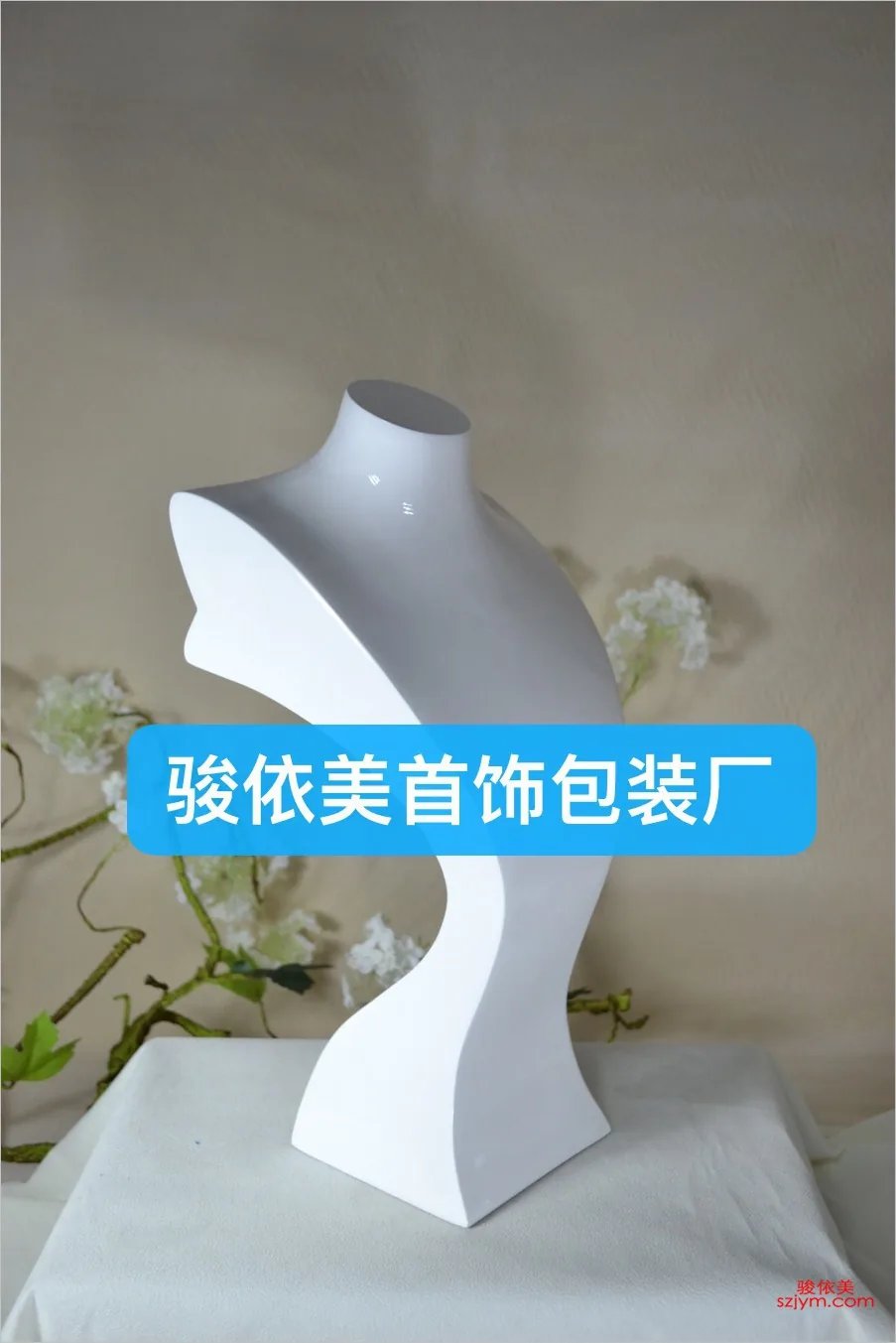
Busts: wearing the necklace on a “person”
Busts and neck stands are the most direct way to show necklaces, ideal for mid-to-high-end pieces, pendant chains and styles that need to show wearing effect. A bust restores the natural state on a human body: the chain falls along the neck and the pendant rests at the chest, so customers see the result without imagining it. When choosing a bust, first check whether the neck circumference and head shape match your main goods, then whether the base is stable - necklaces have weight, and a jade or gold pendant of several dozen grams can easily tip a light base. On pacing: hang only one hero chain on a bust, at most one delicate chain, to avoid crowding; leave half an arm’s distance between busts so each piece can be viewed alone. Busts suit the centre of the counter or a well-lit inner spot, making them the visual star of the necklace zone.
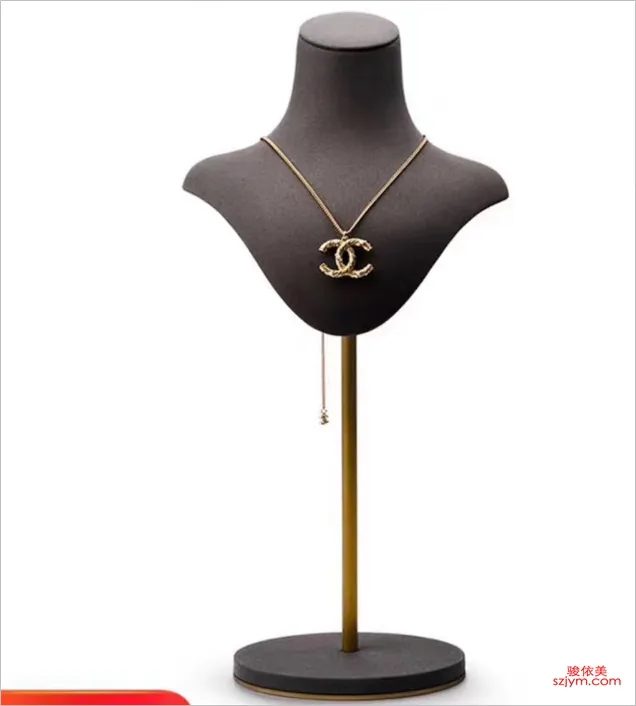
Neck stands: a “staircase” for short and long chains
Neck stands are more restrained, showing only the neck and shoulder line, and suit batch display of similar styles. The core idea is layering: on the same stand, short chains go on the top row, collar chains in the middle, mid-length chains below, creating a clear height difference so customers can tell lengths at a glance and find goods by size. Three rules: first, keep clasps facing the same way for a tidy line; second, make sure pieces with front-and-back pendants face forward and do not flip - add a little counterweight at the tail if needed; third, hang fewer rather than more chains per stand, roughly one arm-width maximum, and split onto another stand beyond that. Neck stands suit the back of the counter or wall display areas, layered away from busts so the whole cabinet looks balanced.
Combining flat and hanging: chain, pendant and mixed layouts
A complete, attractive necklace zone rarely uses just one method. Long chains, double chains and sets suit flat trays, coiled in concentric circles or S-shapes with the pendant centred; fine chains and collar chains suit hanging to avoid tangling during repeated handling. In practice, use “hanging as the main line, flat as support”: place a few high-value sets flat on the outer side for close inspection, hang volume styles on neck stands inside, and let busts add focal points. When changing seasons or stocking new arrivals, move hero pieces to busts and classic pieces down to flat trays, and the counter gains hierarchy instantly. Whichever method, close each evening by returning clasps and turning pendants forward, so opening looks just as tidy - this three-minute habit keeps customers better than any expensive prop.
Necklace display is about telling customers what the piece looks like when worn. Busts tell the wearing effect, neck stands tell length layering, flat trays tell detail and texture; together they give the zone rhythm. Check your counters this week: which chains are tangling, which pendants are facing down - tidy up, split between stands, and half a day buys a more professional counter. Shenzhen Junyimei focuses on jewellery display and counter props, offering busts, neck stands, necklace trays and display stands, and welcomes custom consultations based on store needs.
Hanging rods and spacing directly concern safety: leave enough gap between chains so they do not tangle or press on each other; use small hooks for fine chains and round-tip stands for thick ones to avoid dents; hang set pendants individually to prevent scratches against other metal. Before closing, return pieces to their positions by category and check them - this prevents loss and makes next morning’s opening display calm and orderly. During busy hours, keep a small magnifier and a hand tray by the counter so customers can inspect clasps and settings up close - the link between display and service often hides in details like these.
Original article by Junyimei (lbobo.com). Reprints welcome; please credit the source. Professional display props: https://www.lbobo.com
珠宝柜台的项链区,是除了戒指托盘之外最容易显出专业功力的地方。一条项链挂在什么地方、怎么挂、挂多高,客人一眼就能看出这家店是随手一搭还是认真陈列。很多门店把项链一律塞进平放托盘,结果链子缠成一团、吊坠翻面朝下,客人看一条要理半天;也有门店把项链全部竖挂,长短不一、密不透风,视觉上像一堵金属墙。项链陈列的关键,不在道具贵不贵,而在为不同长度、不同重心的货品选对悬挂方式,再用人头架、脖架和平托盘各司其职。
人头架:把项链戴在“人”身上
人头架和脖子架是项链最直观的展示方式,适合中高档项链、吊坠链和需要体现佩戴效果的款式。人头架的优势在于恢复项链在人体上的自然状态:链子顺着脖子垂下,吊坠落在胸口位置,客人不用想象,直接就能看到上身效果。选人头架时先看脖围和头型是否匹配主力货品,再看底座稳不稳——项链是有重量的,一件玉坠或金吊坠动辄几十克,底座太轻容易前倾。摆放节奏也讲究:同一个人头架上只挂一条主推链,最多搭配一条细链,避免拥挤;柜台上人头架之间留出半臂距离,让每一条都能被单独注视。人头架适合放在柜台中央或靠里光源好的位置,让它成为项链区的视觉主角。
脖架:长短链分层的“阶梯”
脖子架比人头架更克制,通常只露出颈肩轮廓,适合批量陈列、款式接近的项链。它的用法核心是分层:同一只脖架上,短链挂在上排、锁骨链居中、中长链在下,形成从高到低的落差,客人一眼能看出链长的区别,也方便按长度找货。挂法上注意三点:第一,链扣要统一朝外或朝后,保持朝向一致,视觉才整齐;第二,吊坠有正反面的货品,要确保正面朝上、垂下来不翻转,必要时在链尾加一点配重;第三,同一脖架挂的项链数量宁少勿多,以一臂宽为上限,超过就分架。脖架最适合放在柜台后段或壁面陈列区,与人头架拉开层次,让整面柜看起来疏密有致。
平放与悬挂的组合:链、坠、插混合陈列
完整又好看的项链区,往往不只有一种挂法。长链、双层链和套链适合平放托盘,把链体按同心圆或S形盘好,吊坠居中摆放;细链、颈链适合悬挂,避免反复拿起后缠绕。实际操作中可按“竖挂为主、平放为辅”的节奏布置:柜台外侧用平盘放几款高值套链,方便客人近距离细看;内侧用脖架竖挂走量款,让人头架点缀其中做视觉焦点。换季或上新时,把主推款放到人头架、把经典款沉到平盘,柜台瞬间就有了主次。无论哪种挂法,记得每晚闭店前把挂着的项链链扣归位、吊坠朝前,第二天开门陈列依旧整齐——这个三分钟的动作,比任何昂贵的道具都更能留住客人。
项链陈列的本质,是替客人把“戴起来什么样”讲清楚。人头架讲佩戴效果,脖架讲长度分层,平盘讲细节质感,三者搭配,项链区自然就有了节奏。建议经营者本周就检查一次自家柜台:哪些链子在缠在一起,哪些吊坠翻着面,收拢道具、重新分架,半天就能换来更专业的柜面。深圳骏依美专注珠宝陈列与柜台道具,可提供人头架、脖架、项链托盘、展示架等全套陈列配套,欢迎结合门店实际需求咨询定制。
挂杆与间距直接关系货品安全:链条类货品挂放时留出足够间隔,链与链之间避免叠压缠绕;细链配小号挂钩、粗链配圆头挂架,防止挂位留下压痕;镶石吊坠单独悬挂,避免与其他金属件摩擦划伤。每日营业结束前,把挂架上的货品按品类归位检查一遍,既防遗失,也让第二天上午的开店陈列从容有序。人流大的时段,柜台边备一枚小型放大镜与手持托盘,方便客人近距离查看链扣与镶嵌细节——陈列与服务的衔接,往往就藏在这些细节里。
原创声明:本文由深圳骏依美(lbobo.com)原创,欢迎转载,请注明出处。专业珠宝陈列道具,欢迎咨询:https://www.lbobo.com