What the Closing Click of a Box Says盒子的声音经济学
Q1: Does the sound of packaging really change how we judge jewelry?
Yes — and it happens earlier and more decisively than most brands assume. Research has moved the "unboxing sound" out of folklore and into data: a 2026 Packaging World consumer study found that over 68% of high-end consumers say the sound a package makes when opened shapes their first impression of quality. Oxford's Crossmodal Lab showed earlier that a package's sound feeds back into how we judge what is inside — a crisp, controlled open signals "precise and solid," while a dull, loose rattle reads as "cheap and rough." Sound is really an audible test report of material density, structural accuracy and workmanship. That is why jewelry packaging has a KPI almost nobody audits: it scores the brand before the ring or necklace ever does.
Q2: Why does a magnetic "click" sound more premium than a clasp?
Because a magnetic close is controlled: it has damping, it is repeatable, and the force is nearly identical every time. A clasp tends to snap or pop with a random, plasticky edge. Sound is structure in vibration — the more precise the structure, the cleaner the sound. Keep the fold tolerance under 0.2 mm and calibrate the magnet pull in grams, and the open settles into one clean "click." This is why many brands write "sound consistency" into the approval checklist for a jewelry box: if the sound is unpredictable, the quality control is unpredictable.
Q3: What role does sound actually play in unboxing videos?
Unboxing content works as a content asset largely because of sound. ASMR (autonomous sensory meridian response) is present in roughly 20%–70% of people, and low-pitched, layered, slow-paced sounds are the most reliable triggers of that pleasant tingle. A matte paper box with a magnetic close gives a clean "click"; the inner tissue adds a soft "rustle." Together they form a premium sonic signature people want to film and share. The flip side: if the jewelry packaging sounds plasticky or harsh, comment sections will translate that into "cheap" — and one bad sound can undo an otherwise beautiful visual.
Q4: Why do high-end minimalist packages actually sound better than ornate ones?
It comes down to what you might call "acoustic restraint." An ornate box piles on ribbons, paper flowers, layered card and metal appliques, and all of them rattle with a cheap, sometimes irritating shimmer when the lid moves — jarring in a quiet living room. A minimalist box uses one sheet of matte specialty paper, one blind-debossed mark and one magnetic point; the open is a single, clean "click," restrained and expensive-sounding. In short, minimalism is not a cost cut — it moves the budget from surface ornament to structural tolerance and magnet calibration, and sound is simply the byproduct of those tolerances. That is exactly Shenzhen Junyimei's logic: spend on fold error, magnet force and lining fit — the things you can hear — not on foil patterns nobody notices.
Q5: Can packaging sound ever backfire?
It can, and the cause is often missed. A share of people have misophonia-like reactions to certain frequencies; an over-loud tear strip or layers of paper friction become noise in shared or quiet spaces. Good acoustic design aims for "just right": clear but not piercing, damped but not muffled. The safe move is to add "listen to the open" to the approval step of a custom jewelry box — test with the real box, real lining and real magnet, not just the drawing. Pass that, and the unboxing is safe.
Q6: How can smaller brands turn sound into brand equity without a big budget?
Three steps are enough. First, standardize the magnetic close: a few cents of magnet plus a stable structure is the highest-consistency sound investment you can make. Second, design the "swish" of the tissue and seal by choosing its weight, so the rustle feels intentional. Third, write the open sound into the brand book — sound is an "audio identity" alongside the visual VI. Best of all, sound lingers: when a customer keeps the jewelry box to store other pieces, every open is a free brand reminder. Shenzhen Junyimei supports small-batch flexible sampling, so a few hundred boxes can be heard and tuned before scaling — turning one small detail into a long-term repurchase hook.
This is original content. Copyright belongs to Shenzhen Junyimei.
Junyimei — present every jewel and timepiece at its best.你有没有想过,决定一枚戒指在你心里"值不值这个价"的,可能不只是它的火彩,还有盒盖合上时那一声"咔哒"?包装从来不只是视觉与触觉的容器,它还是一件会发声的"听觉签名"。当声音被当作一门可设计的工程,珠宝包装的叙事就多了一层维度。
Q1:包装的声音,真的会影响我们对珠宝的判断吗?
会,而且比很多人以为的更早、更硬。行业研究已经把"开盒声"从玄学拉进了数据:《包装世界》2026 年的一份消费者调研指出,超过 68% 的高端消费品消费者表示,包装开启时的声音会影响他们对产品品质的第一印象。牛津大学 Crossmodal 实验室更早证明,包装发出的声音会反向塑造人对"里面东西"的感知——清脆利落的开启声让人预设"精密、扎实",沉闷松垮的声响则悄悄读作"廉价、粗糙"。这并非孤例——声音早已是一门被认真研究的学科:全球 sonic branding(听觉品牌)市场 2025 年约 18–21 亿美元,预计 2030 年代初增至 32–52 亿美元,年增速约 8%–13%;Ipsos 对 2015 支美国视频广告的元分析更显示,带听觉品牌线索的广告进入"品牌注意力"前三分之一的概率高出 8.53 倍。珠宝虽小,逻辑相通:顾客对"声音"的敏感,远超品牌方的想象。声音其实是材料密度、结构精度和加工工艺的"听觉检验报告":一张高克重特种纸板配精密模切的盒体,开合声厚实低沉、没有杂响;偷工减料的盒子一开就"哐当"带毛边。这正是珠宝包装最容易被忽略的 KPI——它先于戒指项链,先给顾客打了一个分。
Q2:为什么磁吸盒的"咔哒"声,听起来比卡扣更贵?
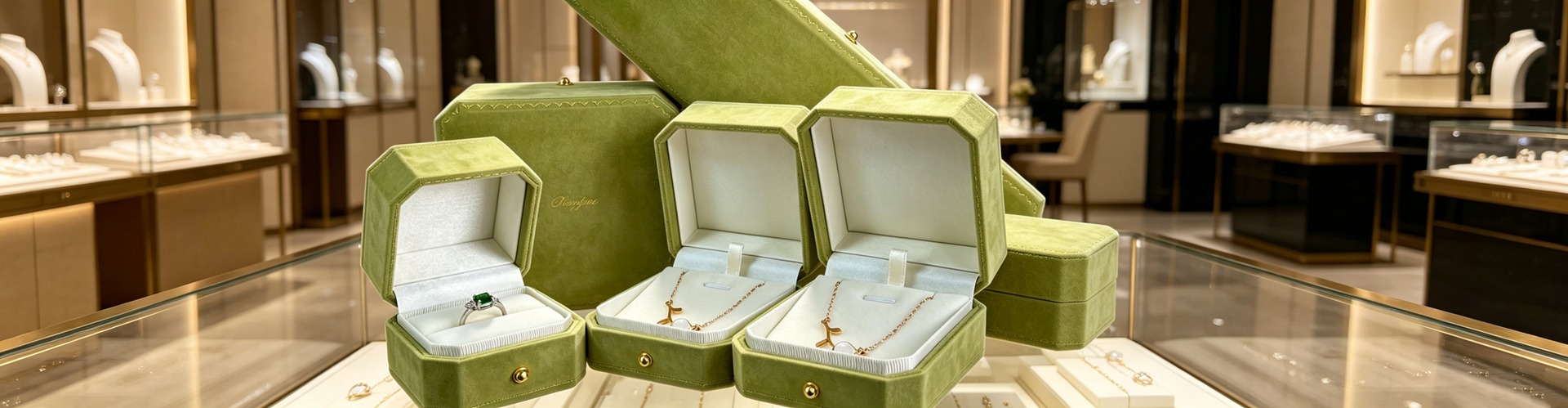
因为磁吸闭合是"受控的":它有阻尼、可重复、每次力度几乎一致;而卡扣往往是"啪"的一声脆响,或塑料件"咔"地弹开,听感更随机、更廉价。声音的本质是结构在振动,结构精度有多高,声音就有多干净。折边误差控制在 0.2 毫米以内、磁吸拉力按克精准标定,开合声才能稳定成一记利落的"咔"。这也是为什么很多品牌把首饰盒的"开合声一致性"写进打样验收——声音不可控,等于品控不可控。
Q3:网上那些开箱视频,声音到底起了什么作用?
开箱视频能成为内容资产,声音是隐形的功臣。ASMR(自发性知觉经络反应)在约 20%–70% 的人群中存在,而低频、有层次、节奏舒缓的声音最容易触发那种"头皮发麻"的愉悦。一枚哑面纸盒配磁吸的干净"咔哒",加上内衬棉纸的"沙沙"声,本身就是一套高级的听觉签名,顾客愿意拍、愿意发。反过来,如果包装声音发塑料感、有刺耳的撕拉,评论区会替你"翻译"成廉价——视觉上再精致的珠宝包装,也可能被一段声音拖垮。正因如此,头部品牌已把"开箱声"写进可测量的品牌资产清单,而不是交给工厂随意发挥——声音和 logo、主色一样,是需要被管理的。
Q4:为什么高端简约的包装,反而比花哨的更"好听"?
这要从"听觉克制"说起。繁复的盒子往往堆着丝带、纸花、多层卡纸和金属贴片,开合时这些元素会一起发出廉价窸窣、甚至刺耳的塑料噪声,在安静的客厅里格外突兀;而极简盒只用一张哑面特种纸、一枚盲压标识加一处磁吸,开合就是一声干净利落的"咔哒",听感高级且克制。说白了,简约不是省钱方案,而是把预算从表面花纹挪到结构公差与磁吸标定上——声音只是这些公差的副产品。这也是深圳骏依美一贯的思路:把钱花在折边误差、磁吸力度、内衬贴合这些"听得见"的地方,而不是花在看不见的烫金花纹上。
Q5:包装的声音,会不会也有"翻车"的时候?
会,而且原因常被忽视。一部分人对特定频率的声音有"恐声"式的反感(misophonia),过于响亮的撕拉带、层层纸花的摩擦,在共享空间或安静场合会变成噪音。所以声学设计讲究"恰到好处":清晰但不刺耳、有阻尼但不沉闷。真正稳妥的做法,是在珠宝盒定制的打样环节就把"听开合声"列为验收动作——用真盒、真内衬、真磁石听一遍,而不是只看图纸。声音这一关过了,开箱才稳。
Q6:中小品牌怎么用"声音"做品牌资产,又不用花大钱?
三步走就够。第一,把磁吸闭合标准化:几块钱的磁石加一套稳定结构,是声音一致性最高的投入;第二,设计棉纸与封签的"嘶啦"声:定制棉纸的克重,让开箱时那一声沙沙显得讲究;第三,把开合声写进品牌手册——声音也是 VI(视觉识别)之外的"听觉识别"。更妙的是,声音会被"留存":顾客把首饰盒留着装别的首饰,每一次开合都是一次免费的品牌提醒。深圳骏依美支持小批量柔性打样,几百只就能先听声、再放量,把"声音"这件小事做成长期的复购钩子。
本文为原创内容,版权归深圳骏依美所有,转载请注明出处。
骏依美——让每一件珠宝与腕表,都被更好地呈现。