How Four Chinese Towns Forge the World's Gems四镇锻造世界彩宝
While the trade fixates on the per-carat price of colored gemstones, the real shift is happening in a handful of Chinese towns most buyers have never heard of. The bracelet on a stranger's wrist, the pendant in a friend's selfie — six or seven times out of ten, those pieces passed through the workshops, studios and live-stream rooms of China's jewelry industry belts before they ever reached a display case. It is the unspoken sequel to this year's colored-gem price surge: everyone asked why stones got expensive, almost nobody asked where they are actually turned into jewelry. More often than not, the answer is a Chinese town.
The numbers are not subtle. China's domestic colored-gemstone market grew from 24.5 billion yuan in 2021 to over 45 billion yuan in 2026 — nearly doubling in five years, with a compound annual growth rate above 13%, against a global average of just 6.8%. Processing output climbed from 29 billion to 47 billion yuan over the same window. The geography is what matters: four clusters — Panyu and Ketang in Guangdong, Wuzhou in Guangxi, and Donghai in Jiangsu — now concentrate more than 70% of the world's colored-gemstone cutting and setting capacity. The number of gemstone-related enterprises in China rose from 12,800 to 21,000 in five years, a 64% jump, as design studios, live-commerce operators and cross-border traders flooded in and dismantled the old wholesaler-dominated model. The boundaries of who sources, who streams and who ships have been redrawn. Regionally the clustering is stark: Guangdong alone holds 42% of enterprises, with Shenzhen and Panyu focused on high-end custom and brand retail and Ketang on wholesale and live commerce; East China — Shanghai, Zhejiang, Jiangsu — takes 23% and leans on designer labels; Shandong's Changle contributes 8% on local sapphire, Henan's Zhenping 7% pivoting from jade, and Yunnan's border towns Ruili and Malipo 6% on cross-border trade. That concentration is precisely what gives China its cost, speed and channel advantages in the global supply chain.
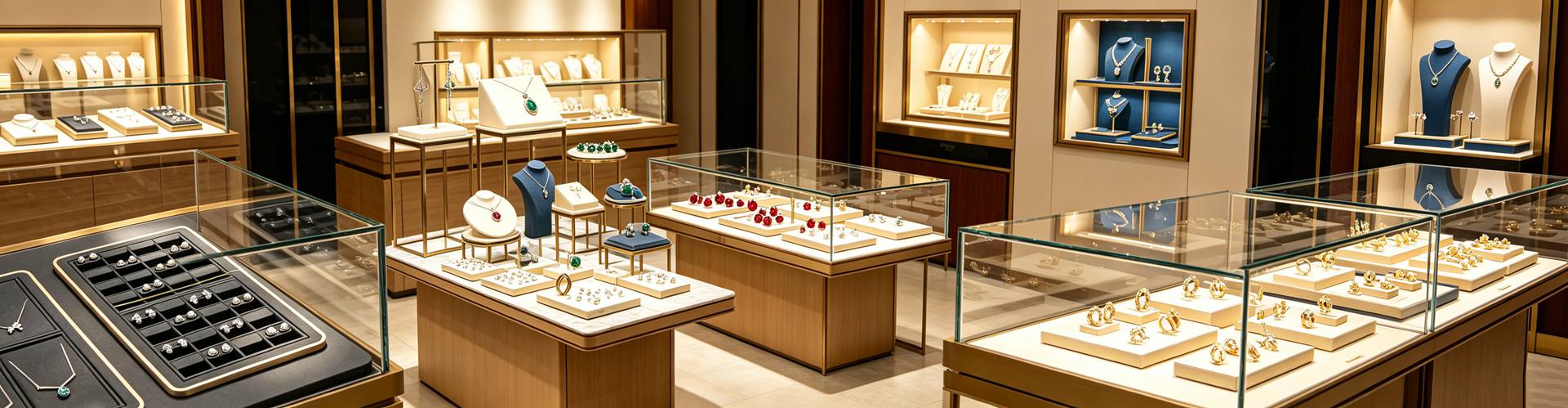
Look closer and each town has its role. Wuzhou, in Guangxi, is the heart of synthetic stones: over 1,000 processing firms there produce more than 10 billion pieces a year, upwards of 70% of the global share — the sparkling accent on your ring that looks like a natural spinel very likely came from here. Panyu, in Guangdong, owns the high end: more than 2,000 processing firms there have built, over three decades, a full pipeline from design and modeling to casting, setting and certification, serving Europe, the Middle East and Southeast Asia, and specializing in small-batch, multi-style flexible orders with minimums as low as 10 pieces and sampling squeezed to three days; Panyu's export alone exceeds 30% of the national jewelry export total. Ketang, also in Guangdong, is the world's largest colored-gem wholesale and live-commerce base, moving product by the ton through live rooms that never sleep under a "shop in front, factory behind, sell across the whole network" model that maximizes cheap, fast and complete. Donghai stands apart as China's crystal capital. And tying it all together is Shenzhen's Shuibei hub — more than 70% of the nation's processing capacity, over 90% of its wholesale trade, and over 100 billion yuan in annual turnover, the gateway through which the belts' products leave for the world.
One footnote on Shuibei deserves its own line. It is not merely a big market; it is the matching engine of the entire belt. Upstream rough dealers, midstream finishers and downstream brands and streamers bid and pick styles in the same place, compressing a new product's journey from prototype to shelf to days. That density is exactly why China's colored-gem response to overseas demand outruns any single country's workshop-style supply. When a tiny global retail trend — say, a celebrity popularizing a certain cut — is spotted, Shuibei can have the imitation everywhere within two weeks. Efficiency, in this business, is itself a kind of pricing power.
What does this add up to? China is long past being a mere assembly bench where rough comes in and finished goods go out. Today, more than 60% of high-end rough from the top ten origins — Myanmar, Sri Lanka, Colombia, Madagascar — ends up processed in China. From 2021 to 2026, gemstone raw-material imports rose from 2.23 billion to 3.45 billion dollars, and finished exports from 1.42 billion to 2.46 billion. The more interesting question is why now: after the pandemic, Western buyers tried to reshore and "friend-shore" supply chains, only to discover that an industry this dependent on skilled hands and dense supporting ecosystems cannot be moved on a timeline. When every critical step sits on the same stretch of land, pricing efficiency, responsiveness and a quiet kind of pricing power drift here too.

There is a second force redrawing the belt's map: traceability and sustainability. As Western regulators tighten rules on material provenance and as younger buyers ask where a stone came from, the old "cheap and anonymous" model is losing ground. Leading clusters are responding with third-party certification, digital origin records and recycling loops, turning what used to be a paper certificate into a queryable asset history. For a belt built on speed and scale, this is a cultural shift as much as a technical one: the next competitive edge may not be who cuts faster, but who can prove, document and responsibly retire a stone. The towns that adapt will keep their 70% share; the ones that don't will watch margin leak away to compliance costs.
But the belt's story is not all ascent. Beneath the boom sits real anxiety: many firms remain stuck in thin-margin OEM work, homogenized and price-driven, with the actual brand power still held offshore by foreign buyers. The traditional "shop-front, factory-behind" model is being rapidly disintermediated by live commerce and a decentralized new ecosystem. More telling still, the rise of self-reward consumption has handed decisions to younger buyers who want design, emotion and identity — not simply a cheap stone. Within the very same belt, Ketang's streamers sell low-end loose stones by the kilogram while Panyu's workshops produce high-premium custom pieces for overseas labels. One cluster, two faces. The pressure is sharpened by what overseas platforms now demand: material compliance, third-party certification and clean traceability have become table stakes for selling into the US and EU, and cross-border return rates for jewelry routinely run 15 to 20 percent, a meaningful slice of which is damaged-in-transit — meaning the belt's efficiency advantage can evaporate the moment a product arrives looking less than pristine.
The belt's next stop is a name. For thirty years the four towns perfected "can it be made"; the next thirty will be judged on "who made it." Designer labels, guochao narrative and original copyrights are moving from the margins to center stage, and younger consumers are learning to pay for the signature rather than the origin. It is no coincidence that the same buyers who demand a signature also film the unboxing; the container has become part of the story they are willing to pay for. Yet wherever the brand travels, it finally lands in a box that can be opened, photographed and given away — packaging is the first layer a consumer actually touches when a belt moves from "contract manufacturing" toward "authorship."
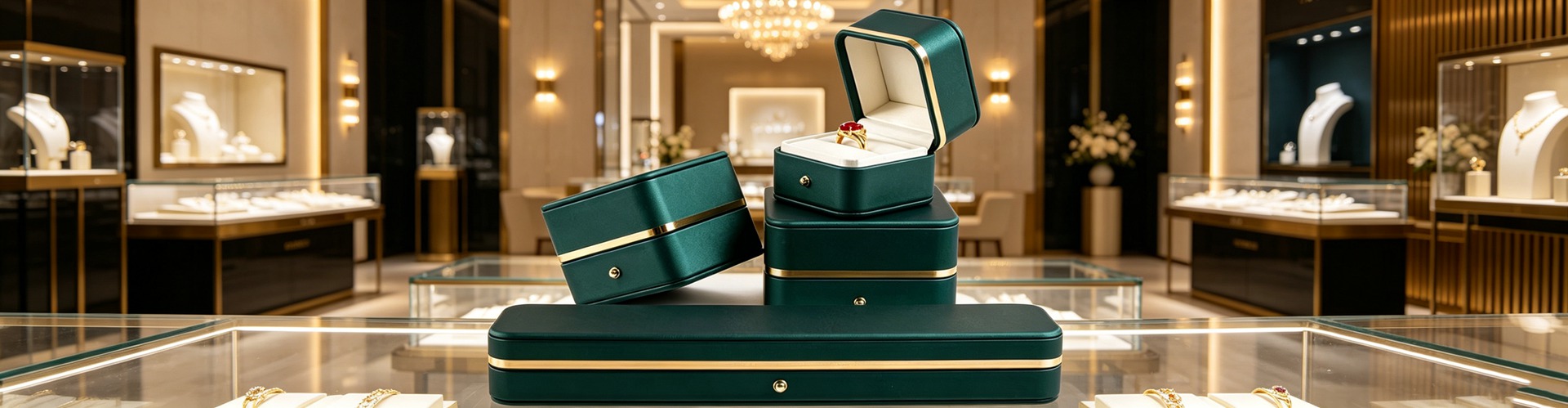
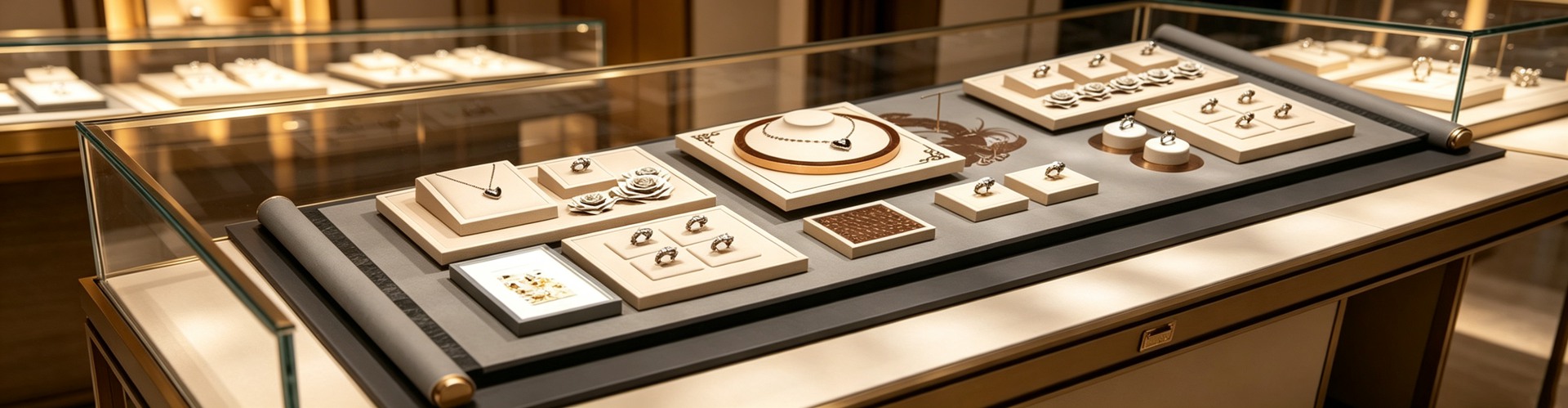
And this is where a quietly overlooked layer enters. Every necklace leaving Panyu or Wuzhou must eventually be boxed, displayed and shipped to New York or Dubai. The belts solved "can we make it"; what makes it "look good, arrive with dignity, and sell as a brand" is another silent piece of infrastructure — the jewelry box factories and the packaging design behind them. A Shenzhen packaging partner like Junyimei shifts budget away from surface ornament and into structural tolerance, so that even a few-hundred-yuan silver piece carries a luxury-grade sense of ritual the moment it is opened. The jewelry packaging box stops being a mere container and becomes the "first business card" a belt product carries as it goes global. When four towns absorb 70% of the world's gemstone work, it is often the small box and the display that decide whether that work is ever seen by the consumer. In a cross-border market where returns bite and first impressions are made through a screen, the box is also the first trust signal: a clean, well-built case reads as "this seller is serious" before a word of copy is read, and it is the one physical ambassador a belt product leaves behind in a stranger's home.
Next time you see a string of glowing colored gems, think one step further: its fate was largely written in the late-night lights of a few Chinese towns — and, just beyond that glow, in countless unseen boxes that carried its value out to the world. The workshop and the box are not rivals; they are the two halves of the same quiet bargain between maker and wearer.
This is original content. Copyright belongs to Shenzhen Junyimei.
Junyimei — present every jewel and timepiece at its best.
当整个行业都盯着彩色宝石的克拉价涨跌时,真正改写游戏规则的变量,其实藏在广东和广西的几座小镇里。那些被消费者戴在手上、发在朋友圈里的彩宝首饰,十有六七,最终都要经过中国这几处产业带的车床、工坊与直播间。这恰好呼应了年初那轮彩宝涨价潮——大家都在问"石头为什么贵",却很少有人问"石头在哪里被做成首饰"。答案,多半在中国的产业带里。
数据可以说明分量。国内彩色宝石市场规模从2021年的245亿元,涨到2026年突破450亿元,五年近乎翻倍,年复合增长率维持在13%以上,而同期全球市场的平均增速只有6.8%。加工产能同步扩张:彩宝加工产值从2021年的290亿元增至2026年的470亿元。更关键的是地理集中度——广东番禺、汕尾可塘、广西梧州、江苏东海这四大产业带,集聚了全球超过70%的彩色宝石切割与镶嵌产能。同期,国内彩宝相关企业从1.28万家增至2.1万家,五年增长超过64%。大量设计工作室、直播服务商与跨境贸易商涌入,把过去由批发商、零售商主导的传统模式,彻底换成了一个去中心化的新生态:谁有货、谁会播、谁能出海,边界正在被重新画过。
把镜头推近,这四座小镇各有分工。广西梧州是全球人工宝石的心脏,当地集聚超过1000家加工企业,年产人工宝石超过100亿粒,占全球市场份额七成以上——你身上那枚看着像天然尖晶石的配石,很可能就出自这里。广东番禺主攻高端加工与出口,三十年的工艺沉淀让它覆盖从设计、起版、倒模、镶嵌到检测的全流程,长期服务欧美、中东与东南亚市场,最擅长小批量、多款式的柔性定制,起订量可以低到10件,打样周期压到3个工作日。汕尾可塘走另一条路:全球最大的彩宝批发与直播基地,前店后厂加全网分销,把"便宜、快、全"做到极致。江苏东海则凭水晶产业独树一帜。而串起这一切的,是深圳水贝——这个坐拥全国70%以上珠宝加工产能、90%以上批发贸易的枢纽,年交易额超过千亿元,是产业带产品走向全球的出口。
值得补一笔的是水贝的角色。它不只是一个大市场,更是整条产业带的"匹配引擎":上游的原料商、中游的精工厂、下游的品牌与直播机构在这里同场竞价、同场选款,一件新品的打样到上架可以压缩到以天计算。也正是这种密度,让中国彩宝对海外需求的反应速度,远快于任何单一国家的作坊式供给。当全球零售端一个小趋势——比如某位明星带火了某一种切割方式——被捕捉到,水贝能在两周内把同款铺到全世界。效率,本身就是一种定价权。
这意味着什么?中国早已不只是"原料流进来、成品流出去"的组装工位。今天,缅甸、斯里兰卡、哥伦比亚、马达加斯加等十大原料产地,超过六成的高端原石最终流向中国加工;2021到2026年,彩宝原料进口额从22.3亿美元增至34.5亿美元,成品出口额从14.2亿美元增至24.6亿美元。更耐人寻味的是"为什么是现在":疫情后西方国家尝试近岸化、友岸化重构供应链,却发现彩色宝石这种极度依赖熟练工匠与配套密度的产业,根本无法在短期内被搬走。当产业链的每一个关键工序都密集落在同一片国土上,定价效率、反应速度乃至隐性话语权,就悄悄转移到了这里。
但产业带的故事并不只有高歌。繁荣的另一面是隐忧:大量企业仍卡在低毛利代工里,同质化严重,真正的品牌话语权握在海外买家手中;"前店后厂"的传统模式,正被直播和去中心化的新生态快速去中介化。更值得警惕的是,悦己消费的崛起把决策权交给了年轻人——他们要的不是"一颗便宜的石头",而是设计、情绪与身份。当可塘的直播间按斤甩卖低端裸石,番禺的工坊却在为海外品牌做高溢价定制,同一个产业带内部,已经裂出两副面孔。
产业带的下一站,是名字。过去三十年,四镇把"能不能做"做到了极致;未来三十年,要比的是"是谁做的"。设计师品牌、国潮叙事、原创版权,正在从边缘走向台前,年轻消费者愿意为"署名"而不是"产地"付钱。而无论品牌走到哪一步,它最终都要落在一只可以被拆开、被拍照、被送出去的盒子上——包装,是产业带从"代工"走向"署名"时,最先被消费者摸到的那一层。
而这恰恰指向一个常被忽视的环节。每一条从番禺、梧州流出的项链,最终都要被装进一个盒子、摆上货架、发往纽约或迪拜。产业带解决了"造得出",而让"造得好看、送得体面、卖得出品牌"的,是另一层沉默的基础设施——珠宝盒工厂与珠宝包装设计。深圳骏依美这样的深圳包装配套企业,把预算从表面花纹挪到结构公差,让一件几百元的银饰在拆盒那一刻也拥有奢侈品般的仪式感;饰品包装盒不再只是保护容器,而是产业带产品出海时附带的"第一张名片"。当四镇把世界彩宝七成的工序揽在手里,真正决定这些工序的功劳能否被消费者看见的,往往是那一方小小的盒子与陈列。
下次再看见一串流光溢彩的彩宝,不妨多想一步:它的命运,大半写在几座中国小镇彻夜不熄的灯火里——而在那串灯火之外,还有无数个不为人知的盒子,替它们把价值递到了世界面前。
本文为原创内容,版权归深圳骏依美所有,转载请注明出处。
骏依美——让每一件珠宝与腕表,都被更好地呈现。