When Gold Began Selling Stories Instead of Grams黄金卖出故事价
A gold card smaller than a fingernail weighs 0.02 grams and sells for 238 yuan. Spread across its weight, that is roughly 11,900 yuan per gram — about ten times the day's branded gold spot price. Nobody is buying the metal. Laofengxiang's Saint Seiya collab card did nearly 100 million yuan in sales in two weeks; on resale platforms, a pure-gold piece from the same series was flipped for 188,800 yuan and still found a buyer. One tiny card reveals a quiet revolution inside the gold industry: the metal is stepping back, and the story is moving to the center of the price tag.
This is not an outlier. According to Beijing Business Today, in the past year alone 13 gold and jewelry brands teamed up with more than 40 IPs — Laofengxiang with six, Chow Tai Fook and Chow Sang Sang with five each, TSL and CHJ with four each, and Lukfook and Laomiao with three. Chow Tai Fook's Black Myth: Wukong collab passed 150 million yuan in half a year; its Forbidden City series exceeded 4 billion. In Chow Tai Fook's FY2026, the Wukong line's retail value grew over 130% year on year, e-commerce retail value rose 113%, and fixed-price jewelry's share of mainland retail value climbed from 30.6% to 35.4%. When Chiikawa landed in Hong Kong, shoppers queued three hours early; four of nine products sold out within two hours, and male buyers on Tmall jumped from 20% to 40%. At China Gold's Shanghai flagship, an immersive IP-themed store drew hundred-meter lines of mostly young women — not for bullion, but for a联名 phone chain.
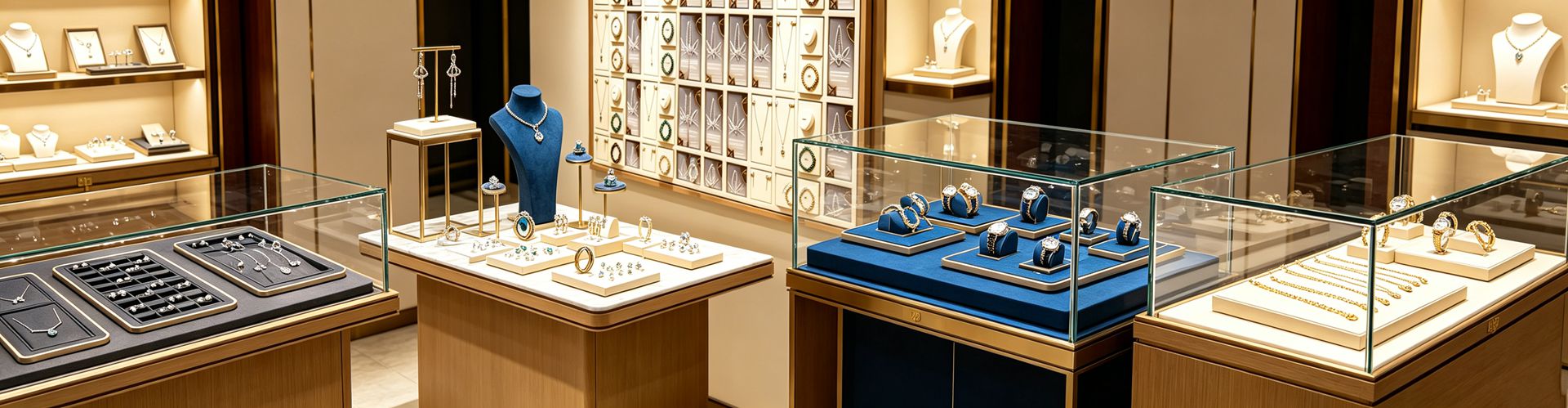
Brands have turned this game into a tiered pricing craft. Entry-level pieces at a hundred yuan lower the barrier to trying — a联名 gold phone sticker, say. Mid-tier pieces at a thousand yuan become the collector's hit, like MONOLOGUE's "Tokito" badge with Demon Slayer. Top-tier pieces at ten thousand yuan serve high-net-worth IP fans, such as a limited gold Saint Seiya armor. Each tier prices by the "thickness of the story" rather than the "weight of the gold." What separates a 3x premium from a 10x one? The market keeps confirming four variables. First, the paying stickiness of an IP's fandom: fans are buying the instant their youth memory lit up, not the gold price, and will pay far above the material for that feeling. Second, lightweighting — every collab piece with a premium above 5x weighs under 0.2 grams. Squeeze the gram weight low enough and the ticket lands at 200 to 700 yuan; sensitivity to "price per gram" collapses, and the decision flips from "buying gold" to "buying a small thing I like." Third, cultural attribution: the Forbidden City and Suzhou Museum turn heritage motifs into wearable symbols, and gold becomes how young consumers express cultural confidence. And fourth, the deepest shift of all — gold moves from pricing-by-gram to pricing-by-story. The genius is that it decouples the ticket from the commodity: once the price is tied to a story, a gram of gold can be worth ten times its melt value, and the brand stops competing with the bullion counter down the street.
The battleground is no longer just the product but the store. China Gold's Shanghai flagship recently rebuilt itself around an immersive IP theme — queues of young women, not bullion buyers, snaking out the door for a联名 phone chain, with staff trained specifically for IP operations and young-customer service. The card itself is almost an excuse; what brands are really selling is a place to belong and a reason to show up. When the object is this light, the experience has to carry the weight, and the counter becomes a stage for fandom rather than a place to weigh gold.
Behind this is a changing consumer base. Gen Z has pulled gold out of the bridal-and-store-of-value script and injected it with rebellion and personality. Chow Tai Fook's youthful line MONOLOGUE declares "KNOW ME OR NO ME," turning King of Fighters and pearl-milk-tea pendants into fans' "medals of faith." When wearing a piece confirms your belonging to a circle, gold completes a three-step identity jump: from a store of value, to a cultural medium, to social currency. Chow Tai Fook now lists new-customer conversion — not gram-weight sales — as the core KPI of its collabs. What brands are really buying is young people's attention, not the swing of the gold price. It echoes a wider backdrop: China's "goods economy" — the collecting and trading of ACG merchandise — is pulling gold into young consumers' cultural shopping lists, giving a gold card and a character sticker the very same social grammar.
There is a parallel here with how luxury rebuilt its own premium. For years the West's maisons leaned on heritage and scarcity; Chinese gold brands are now building a parallel cultural premium, but one anchored in fandom rather than lineage. The collab is the bridge: it borrows the emotional density of an IP a generation already loves and stamps it onto gold — a material the same generation had written off as their parents' asset. The result feels both culturally rooted and defiantly playful, with a price that no longer answers to the morning fix. For the first time in a generation, gold jewelry is cool on young people's own terms — not inherited, not invested, but collected and displayed like any other piece of fandom. That is a bigger shift than any single collab suggests, because it changes who walks into the store and what they come to buy.
Once gold starts selling stories, its container quietly changes shape too. The first job of jewelry packaging used to be protection — against knocks and oxidation. But these featherweight "goods," the cards, badges, phone chains and mini medallions, no longer need a heavy vault. They need a vessel that holds the IP emotion, photographs well in someone's hand, and stays on a shelf or dresser for years. A 0.02-gram card paired with a bulky velvet box is a narrative mismatch; what it wants is a light jewelry box that just cradles the liking, with a fixed slot for the certificate and number, and a lid that opens smoothly with one hand. And when a young buyer posts the collab to their feed, the opaque, reusable pouch printed with a single clean mark becomes the most recognizable carrier of this "priciest goods" — social currency you can hold. The same logic reshapes the whole unboxing moment: where a heavy piece demanded a vault-like case, a featherweight "goods" item asks its box to disappear into daily life — to sit on a desk, to be reopened for a photo, to be handed to a friend. The box stops being a safe and becomes a stage.
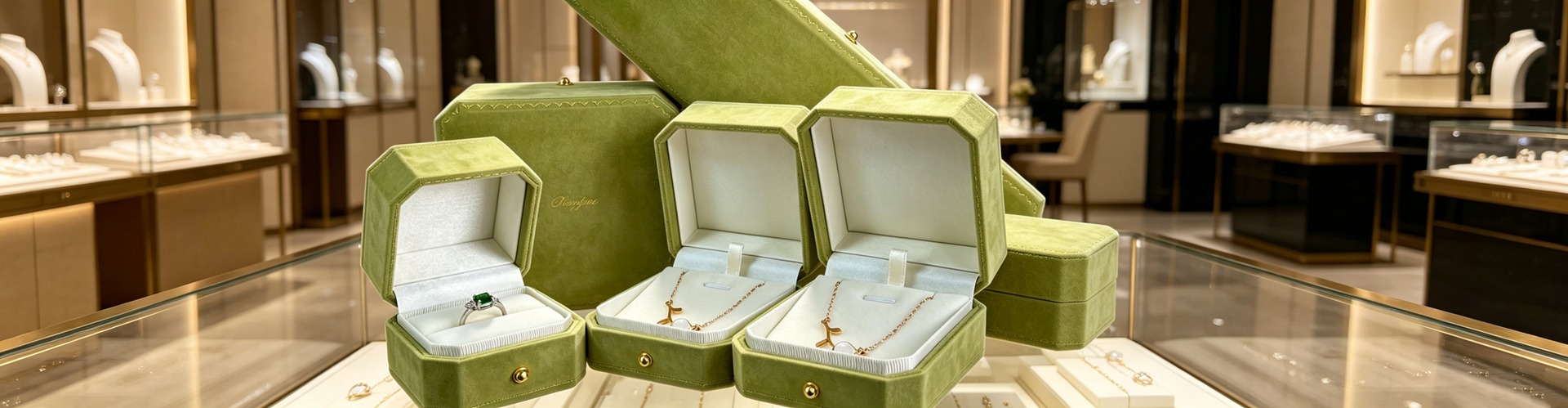
One layer deeper, jewelry packaging design is being redefined: from protecting gold to sealing emotion. Part of a collab's premium is narrative, and the box is the physical cap on that narrative — the IP mark on the lid, the limited line printed inside, the character silhouette on the wrap are what fix the "moment of purchase" in place. When the product itself is as light as a card, the packaging has to be even more restrained and precise, because no material heft can stand in for the story; every tolerance is handed to structure. This is exactly what Shenzhen Junyimei does: move the budget from surface ornament to the force of the closure, the fit of the lining, and the straightness of the fold, so a small box still opens cleanly, photographs well, and passes hands ten years later.
Yet a bucket of cold water is due. Zhou Ting of the IAMI Research Institute warns that blindly chasing short-lived hit IPs only turns a brand into the IP's sales channel; for some, collabs are pure "fear of being left behind," and once the IP fades, lost traffic and piled-up inventory are just as real. When every counter stacks联名 gold cards, the scarcity of "pricing by story" gets diluted too. The lesson from fashion is blunt: a logo slapped on a fading meme sells once and then sits. Collabs compound only when the IP and the brand grow the same audience. The real winners treat the IP as a language to talk with young people, not a quick fix that burns through attention.
Gold has not lost its value. The coordinate system of that value simply moved — from the gram scale, into the story. And a story, after all, needs somewhere to live. The brands that understand this will stop weighing their gold and start weighing their narrative — and the box, more than ever, is where the story is kept.
This is original content. Copyright belongs to Shenzhen Junyimei.
Junyimei - present every jewel and timepiece at its best.
柜台上摆着一张不到指甲盖大小的金卡,重0.02克,标价238元。把售价摊到克重上,每克高达11900元——是当天品牌足金挂牌价的近十倍。买它的人当然不是冲着那点金子。老凤祥与《圣斗士星矢》联名的这张足金卡,上市两周销售额逼近1亿元;在二手平台,同系列纯金藏品被炒到18.88万元仍有人接。一张金卡,照见了黄金行业正在发生的一场静默革命:金属本身正在退场,故事站到了定价的正中央。
这不是孤例。据北京商报不完全统计,近一年里13家黄金珠宝品牌合计联动了超过40个IP——老凤祥布局6个,周大福、周生生各5个,谢瑞麟、潮宏基各4个,六福与老庙各3个。《黑神话:悟空》联名系列半年销售额超过1.5亿元,与故宫的联名系列更突破40亿元;周大福2026财年黑神话系列零售值同比增长超130%,电商零售值增长113%,定价首饰对内地零售值的贡献从30.6%抬升到35.4%。当Chiikawa联名登陆香港,顾客提前三小时排队,九款产品中四款两小时内售罄,天猫男性买家占比从20%飙到40%;中国黄金上海旗舰店搭起沉浸式IP主题门店,门口排起百米长龙,来的多是年轻女性,不为金条,只为一条联名手机链。
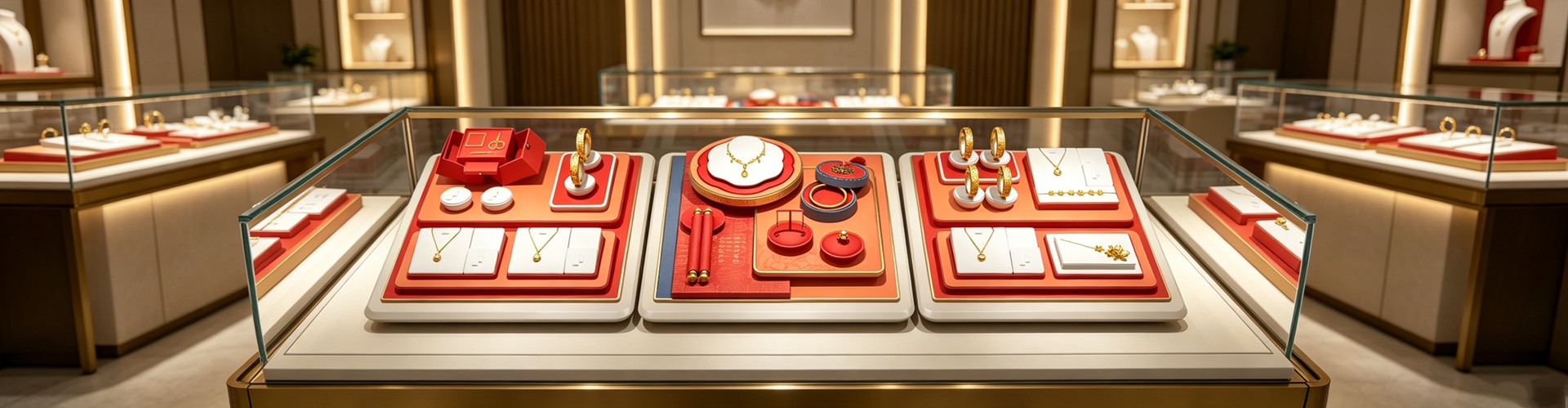
品牌把这场游戏玩成了分层定价术:百元级入门款拉低尝鲜门槛,比如一张联名黄金手机贴;千元级做爆款收藏,比如MONOLOGUE与鬼灭之刃的"无一郎吧唧";万元级服务高净值IP粉,比如圣斗士星矢限量黄金圣衣。每一层都在用"故事厚度"替代"金子分量"来标定价格。溢价从近3倍到近10倍,差的是什么?市场反复验证出四个变量。其一是IP圈层的付费粘性——粉丝买的是青春记忆里那个燃烧小宇宙的瞬间,不是金价,愿意为情怀支付远超材质的溢价。其二是克重轻量化,所有溢价超过5倍的联名款没有一件超过0.2克;当克重压到几乎可忽略,单件落在200到700元,消费者对"每克多少钱"的敏感急剧下降,决策逻辑从"买金"变成"买个喜欢的小玩意儿"。其三是文化属性,故宫、苏州博物馆把文物纹样变成可佩戴符号,黄金成了年轻人表达文化自信的载体。其四,也是最底层的一跃:黄金从"按克计价"转向"按故事定价"。
这背后是消费主体的换血。Z世代把黄金从婚嫁保值场景里解放出来,注入叛逆与个性——MONOLOGUE以"KNOW ME OR NO ME"为宣言,把拳皇、珍珠奶茶化作吊坠,让饰品成为粉丝的"信仰勋章"。当佩戴即是圈层身份的确认,黄金就完成了从保值工具到文化媒介、再到社交货币的身份三连跳。周大福把"新客转化率"而非"克重销量"列为联名核心KPI,说明品牌真正在买的,是年轻人的注意力,而非金价的波动。它呼应的是一个更大的背景:中国的"谷子经济"——围绕ACG内容周边的收藏与交换——正把黄金拽进年轻人的文化消费清单,让一枚金卡和一张角色色纸拥有了同样的社交语法。
当黄金开始贩卖故事,它的容器也悄悄变了形。过去珠宝包装的第一任务是防磕碰、防氧化;而如今这些轻到几乎无重量的"谷子"——金卡、吧唧、手机链、迷你金章——需要的不再是厚重保护,而是一处能承载IP情绪、能被举到镜头前、能在书架或梳妆台上长期停留的容器。一枚0.02克的金卡若配一只笨重绒布盒,叙事立刻错位;它要的,是刚好托住这份"喜欢"的轻巧首饰盒,是为证书与编号留固定位、开合顺滑到单手可启的收纳。年轻人把联名款晒进朋友圈时,那只不透光、可反复使用、只印一枚干净标识的首饰袋,反而成了这张"最贵谷子"最有辨识度的社交货币载体。
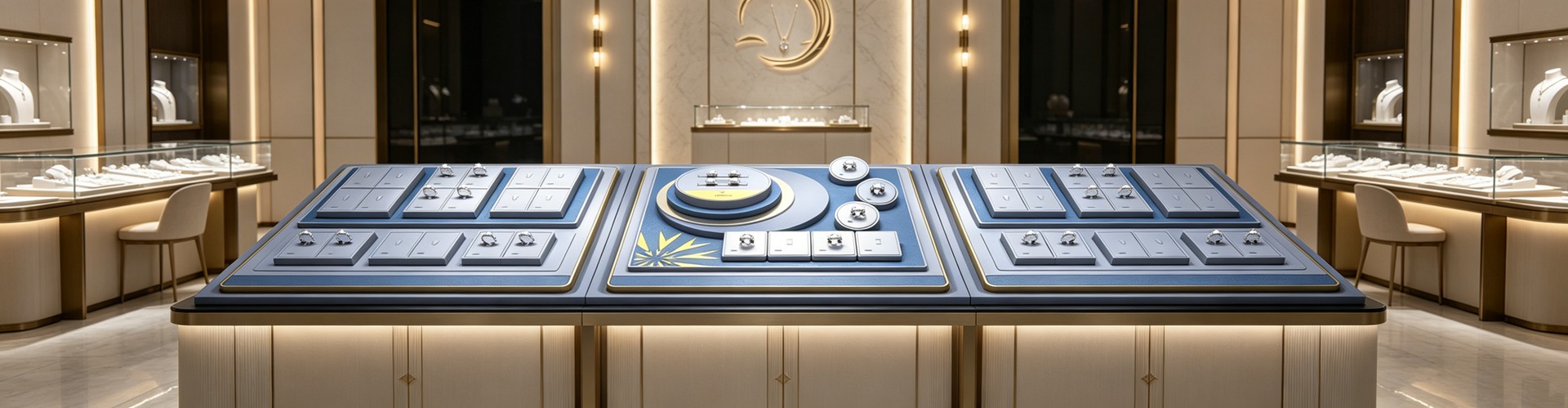
更深一层,珠宝包装设计的角色被重新定义:它从"保护金子"升级为"封存情绪"。联名款的溢价里有一部分是叙事,而盒子正是叙事的物理封口——盒面那枚IP标识、内盖那句限定文案、棉纸上的角色剪影,都是把"买到的瞬间"固定下来的装置。当产品本身轻如一张卡,包装反而要更克制、更精准,因为没有任何材质分量可以替叙事兜底,所有容错都交给了结构与公差。这正是深圳骏依美一直在做的事:把预算从表面花纹挪到开合力、内衬贴合与折边精度,让一只小盒经得起十年后再次被打开、被拍照、被转送。
但需要泼一盆冷水。要客研究院周婷提醒,盲目追逐短期热门IP,只会让品牌沦为IP的销售渠道;部分品牌的联名本质是"怕掉队"的焦虑,IP退潮后客流流失、库存积压的风险同样真实。当所有柜台都摆上联名金卡,"按故事定价"的稀缺性本身也会被稀释。真正的赢家,是把IP当作与年轻人对话的语言,而非透支流量的速效药。
黄金从未失去价值,只是价值的坐标系挪了位置——从克重表,移到了故事里。而故事,总得有个地方安放。
本文为原创内容,版权归深圳骏依美所有,转载请注明出处。
骏依美——让每一件珠宝与腕表,都被更好地呈现。