Display Order for Earrings: Rotating Stands, Trays and Pairs耳饰的陈列秩序:旋转架、托盘与成对展示
Earrings are the category in a jewellery counter that most depends on “pairs”: one stud, one drop earring, each taking one ear, and losing one destroys the whole piece. That is why the biggest enemy of earring display is not limited space but disorder - left-ear pieces wandering to the right, single earrings scattered in trays, customers rummaging for a matching mate and walking away from even a favourite style. The core of good earring display is to keep every pair together, visible at a glance, and picked up as a pair. Rotating stands, partitioned trays and vertical display bars are the three common tools; choose them well and the earring zone turns from a bargain bin into a boutique shelf.
Rotating stands: see everything without moving
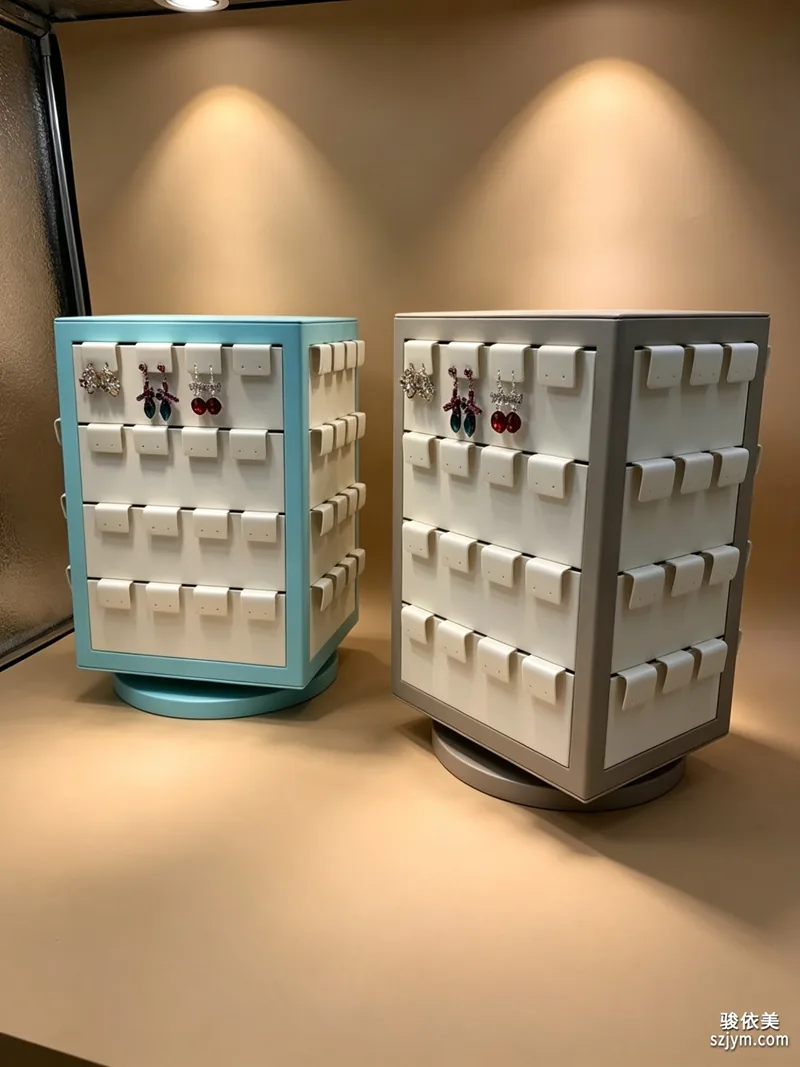
Rotating earring stands suit stores with many styles and frequent updates. They occupy little floor space and offer high display density: one stand usually holds dozens of pairs, and customers simply turn it to review every style within an arm’s reach, no bending, no craning. Two rules apply. First, arrange by series - put the same collection, tone or material on the same level or adjacent positions, giving customers a clear sense of direction while browsing. Second, keep each level airy; the backing should show between pieces, never packed so tight that earrings hide each other or collide and scratch during rotation. Rotating stands suit the centre of the counter or a traffic junction, acting as the main display unit of the earring zone - customers gathering around it is itself a signal of dwell time.
Partitioned trays: a “household register” for pairs
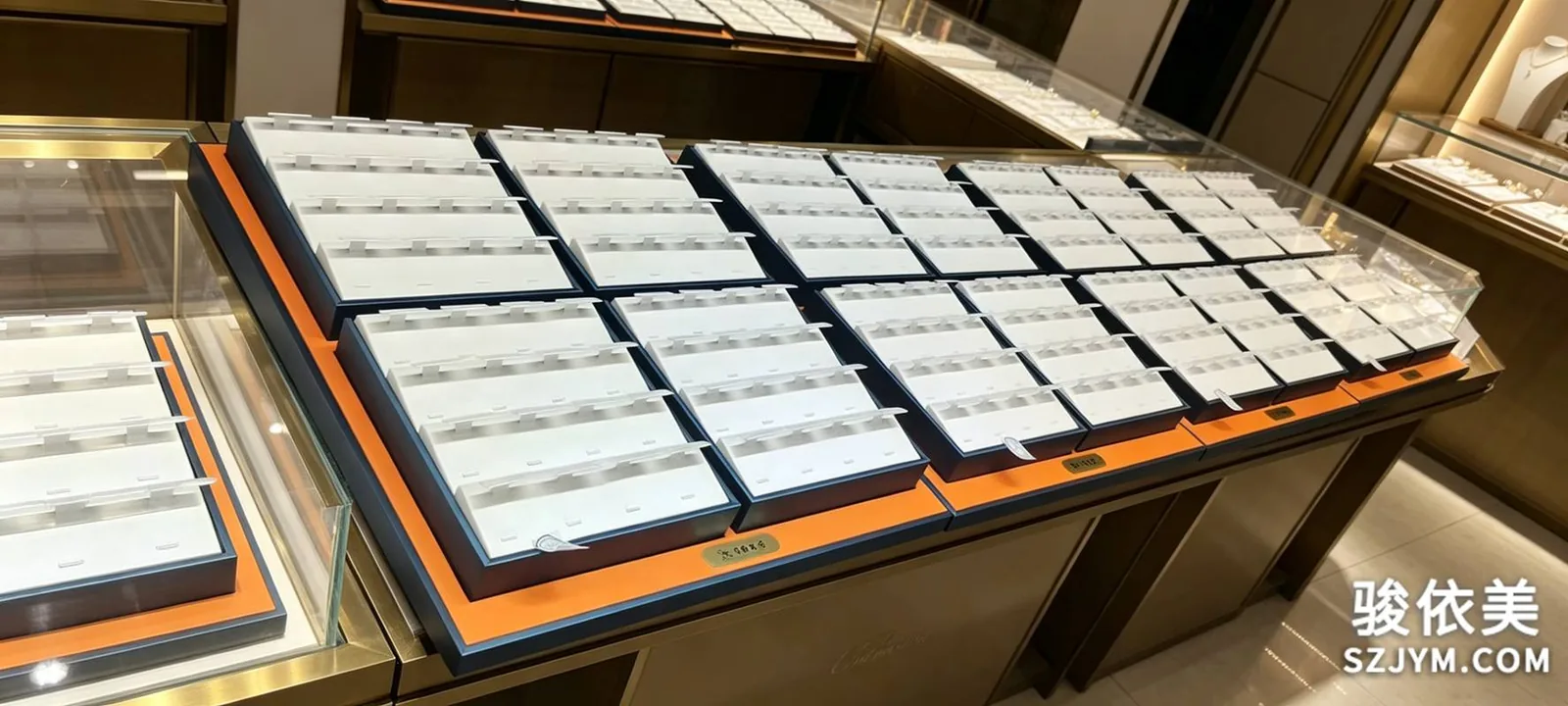
Trays are the fallback solution for earrings and the most reliable carrier for pair management. In a compartmentalised earring tray, each cell is naturally a “household”: one pair occupies one cell, left ear on the left, right ear on the right, and the cell base can use different colours to mark series or price. When trays are used well, a pair returned casually after trying-on stays organised the next day. Three notes in practice: first, cell size must match the earring diameter - too large lets the pieces slide and topple, too small makes picking and placing difficult; roughly one or two tufts of velvet clearance after placing. Second, manage high-value and volume styles separately - high-value pieces use independent cells or deep cushioned cells, avoiding tangling with chain earrings in mixed cells. Third, keep tray positions fixed and each cell stable, so staff restock by map and customers build memory.
Vertical bars and the pair principle
Besides rotating stands and trays, vertical earring bars and stud cards are common supplements, especially for pieces with bold, visible silhouettes. Bars show earrings face-out in three dimensions, brighter under light than flat display, and many stores use them as decorative wall displays. But bars must hold the “pair” principle firmly: what hangs on a bar must be a complete pair shown side by side - never single earrings just because they look good, or customers will mistake them for single pieces and feel disappointed when told they come as a pair. Another detail is stem stability: earrings on bars are inserted into slots; loose slots drop pieces, so check slot tightness weekly. A dropped earring should be temporarily stored rather than forced back in. The order of earring display ultimately comes down to the minimum unit of “pair by pair” - tools can change, goods can shift, but this principle cannot break.
Upgrading the earring zone often pays off fastest: sorting scattered earrings by series, making every pair appear as a pair, and raising density with rotating stands can transform a counter in an afternoon. Done right, customers find faster, try on smoother, and add-on sales rise. Shenzhen Junyimei focuses on jewellery display and counter props, offering rotating earring stands, earring trays, display bars and full counter display sets, and welcomes custom consultations based on store needs.
Earring zoning goes beyond style - consider materials and the customer’s trying-on route: store silver and gold-plated pieces separately to avoid rubbing; arrange studs from small to large so customers find the right size at a glance; keep oxidisation-prone plain silver in lidded sealed trays, as open storage darkens them over time. Place a small standing mirror and alcohol swabs near the trying-on spot so customers can wipe earrings before and after - hygienic, and a mark of care. Check the earring zone thoroughly every week, focusing on bent posts and loose backs, to control wear before it happens.
Original article by Junyimei (lbobo.com). Reprints welcome; please credit the source. Professional display props: https://www.lbobo.com
耳饰是珠宝柜台里最讲究“成对”的品类:一只耳钉、一只耳环,各占一个耳朵,少了一只整件就失去价值。也正因为如此,耳饰陈列最大的敌人不是空间小,而是乱——左边的耳环跑到右边,单只散落在托盘里,客人翻半天找不到配对的另一只,再喜欢的款式也会放下走人。做好耳饰陈列,核心是让每一对耳饰永远待在一起,并且让客人一眼就能看到、拿起即成对。旋转架、分区托盘和立式展示条,是完成这件事的三件常用工具,选对用法,耳饰区就能从“杂货摊”变成“精品架”。
旋转架:让客人在原地看遍全貌
旋转耳环展示架适合款式多、更新快的门店。它的好处是占地面积小、展示密度高:一只旋转架通常能挂几十对耳环,客人只要转动架子,就能在一臂之内看完全部款式,不用弯腰、不用探头,体验顺滑。用旋转架有两条原则。第一,按系列分区排布,把同系列、同色系或同材质的耳饰挂在同一层或相邻位置,客人找款式时方向感明确;第二,每层挂量留出透气感,格位之间能看见底衬,不要挂到密不透风——耳饰体积小,越挤越容易互相遮挡,也容易在旋转时碰撞、刮花。旋转架适合放在柜台中央或动线交汇处,作为耳饰区的主展示体,让客人围着它转,本身就是一种停留信号。
分区托盘:成对存放的“户口本”
托盘是耳饰陈列的兜底方案,也是成对管理最可靠的载体。带格位的耳饰托盘,每一格天然就是一个“户口”:一对耳饰固定占用一格,左边放左耳、右边放右耳,格底可用不同颜色区分系列或价位。托盘用好了,客人试戴完随手放回,第二天也不会乱。实际使用中注意三点:第一,格位大小要匹配耳饰直径,过大的格位会让耳饰滑动、碰倒,过小则取放困难,一般以放入后四周留出一两根绒的距离为宜;第二,高值款与走量款分格管理,高值款用独立小格或带衬的深格,避免与链耳环混放互相缠绕;第三,托盘摆放位置要固定,每格对应哪款货尽量稳定,店员补货时按图索骥,客人也更容易形成记忆。
立式展示条与成对原则
除了旋转架和托盘,立式耳饰展示条、耳钉卡条也是常见的补充工具,特别适合展示单只体积醒目、设计感强的耳环。立式条的好处是耳饰正面朝外、立体呈现,灯光下比平放更亮眼,很多门店把它用作墙面的装饰陈列。但立式条要格外守住“成对”原则:挂在条上的耳饰必须是完整一对并排展示,绝不能因为好看就只挂单只——否则客人会误以为是独只款,问了价钱才发现要成对买,体验打折。另一个细节是耳针的稳固:立式条上耳饰是插进卡槽的,插口松了容易掉,每周要检查一遍卡槽松紧,掉到地上的耳饰宁可暂收起来也不要勉强挂回。耳饰陈列的秩序,最终要落实到“一对一对”这个最小单位上,工具可以换、货品可以调,这个原则不能破。
耳饰区的陈列升级,往往是最快见效的:把乱堆的耳饰按系列归位、让每一对都成对出现、用旋转架提升展示密度,通常一个下午就能让柜台改头换面。做对了,客人找款更快、试戴更顺、连带销售也更多。深圳骏依美专注珠宝陈列与柜台道具,可提供旋转耳环架、耳饰托盘、展示条、柜台陈列配套等,欢迎结合门店实际需求咨询定制。
耳饰的分区不止于款式,还要考虑材质与客人的试戴动线:银饰与镀金饰品分区存放,避免混放时相互摩擦;耳钉按尺寸由小到大排列,客人试戴时一眼能找到适合的尺码;容易氧化的素银款放进带盖密封托盘,裸放时间久了容易变色发暗。试戴台附近顺手放一面小立镜与酒精棉片,客人试戴前后擦拭一下,既卫生,也体现门店的细致。耳饰区每周做一次全面检查,重点看耳针是否弯折、耳堵是否松动,把损耗控制在发生之前。
原创声明:本文由深圳骏依美(lbobo.com)原创,欢迎转载,请注明出处。专业珠宝陈列道具,欢迎咨询:https://www.lbobo.com