The 2026 Shanghai International Jewelry Fair Opens Next Week: What Gold Fever and Lab-Grown Diamonds Mean for Counter Display上海国际珠宝展下周启幕:黄金走热与培育钻石首秀,柜台陈列怎么看
The 2026 Shanghai International Jewelry Fair (CSJE 2026) will open on November 13-16 at the Shanghai World Expo Exhibition and Convention Center, one of the largest gold and jewelry industry events in the Yangtze River Delta this year. Under the theme "Heritage, Innovation, and True Gold," leading brands including Laofengxiang, Laomiao Gold, China Gold and Jinya Jewelry will gather, while a lab-grown diamond delegation from Henan makes its first appearance in Shanghai, with 100 one-carat lab-grown diamonds to be given away on site. For jewelry retailers, this year-end show is not only a window for sourcing and ordering, but also a barometer of display trends, product mix and consumer psychology for the coming season. Counter operators would do well to think through a few questions before the fair opens.
Gold consumption is the first main line. Gold buying has remained a year-round hotspot in 2026, and the fair's first highlight is one-stop gold shopping. A volatile but high gold price has not cooled demand; it has made customers pickier, weighing both weight and craftsmanship. Under such conditions, counter display should shift from "stacking more" to "explaining clearly": gold counters do not need to be packed to the brim, but should leave enough visual breathing room so that customers spot hard-pure-gold, ancient-method gold and fancy-set pieces at first glance, rather than a counter of identical pendants. A combination of low trays and mid-height vertical stands lets weight, craftsmanship and style information be clearly readable whether customers bend down or look straight ahead, and helps sales staff complete the "introduce-try on-close" flow at one height.
The fair has a special background this year: the resilience of traditional Chinese gold jewelry consumption and the rapid rise of the lab-grown diamond category are the two hottest industry topics, and both will appear at the same show. Unlike previous years, a dedicated lab-grown diamond hall opens for the first time, and the Henan delegation will showcase laboratory-grown stones, fancy cuts and value-for-money bridal rings; meanwhile brands such as Laofengxiang and Laomiao Gold continue their popularity, investing further in hard-pure-gold, ancient-method gold and filigree craftsmanship. Small and medium retailers do not need to walk the whole floor: follow two threads — new designs and the workmanship-fee system in gold, and categories and price bands in lab-grown diamonds — and the visit becomes much more efficient.
Lab-grown diamonds add a new variable. Their average price is much lower than natural stones of the same specification, with lighter weight and more diverse settings, appealing to young customers who value value-for-money and design. Display should therefore amplify craftsmanship and design rather than scarcity: use small spotlights or accent lamps to bring out the brilliance of the main stone, dark velvet pads to enhance the brightness of white stones, and make style cards and price tags more visible. The on-site "Shanghai Custom-Made" zone supports on-the-spot design and setting, showing that consumers increasingly pay for exclusivity. A "customizable" display position with a blank pad plus a sample can trigger more inquiries than a fully stocked counter.
Three details from the fair are worth copying in store. First, layered lighting: the fair combines top key light with in-counter fill light; retailers can similarly divide counters into a hero zone and a transition zone, using spotlights for the former and soft light for the latter. Second, traffic flow: the fair guides visitors along a route, and counters should place frequently-tried categories in the middle section to naturally hold customers, while putting slow-moving premium items at both ends. Third, white space and information balance: bold price boards and category signs play a navigation role at the fair; keeping a few such visual guides in store reduces fatigue from repeated inquiries and helps new customers find what they want.
After the fair, what separates winners is rarely what they bought, but whether they brought ideas back. Shop owners should make three lists: a product list marking which items can be benchmarked against the fair for price and craftsmanship; a props list recording the trays, lighting and stands that made people stop; and a sales-script list capturing how exhibitors explained hard pure gold and lab-grown diamonds, ready for staff training. Display is not a one-off renovation but a daily practice adjusted with every order and every festival; the fair simply offers a chance to observe all competitors at once. Turn observations into lists, and lists into actions, and the counter will change in ways customers notice next peak season.
The year-end season usually peaks in weddings and gifting, and the fair's "true gold" theme echoes the countdown to New Year consumption. The fair offers direction for selection and display: keep gold stable, innovate with diamonds, and add value through customisation. After visiting, do not rush to overhaul the counter; start with lighting, trays and signage to build a stage for hero products, then adjust the product mix gradually based on order feedback. Display should follow the market, and the counter will then follow the traffic. Shenzhen Junyimei focuses on jewelry display and counter props, offering display cabinets, trays and stands, and welcomes custom consultations. 2026上海国际珠宝展将于11月13日至16日在上海世博展览馆举行,本届展会以“传承·创新·共鉴真金”为主题,老凤祥、老庙黄金、中国黄金、今亚珠宝等一线品牌将集中亮相,河南培育钻石展团首次组团登陆申城,现场还将随机抽取100颗一克拉培育钻石送给观众。对珠宝零售而言,这场年末大展不仅是采购与订货的窗口,更是观察明年陈列趋势、货品结构与消费心理的风向标,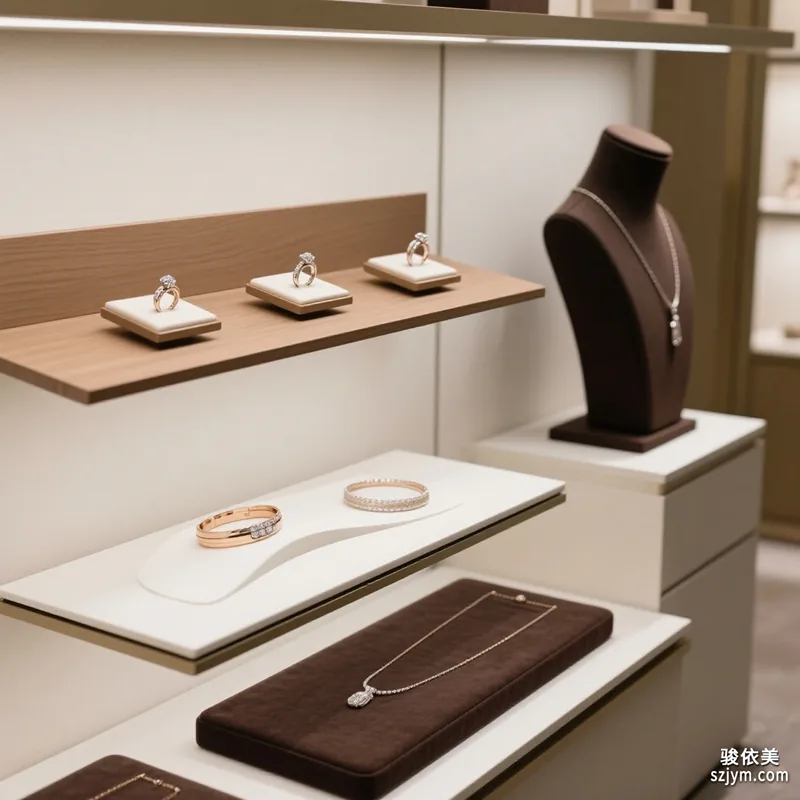 先看黄金消费这条主线。2026年以来黄金消费持续升温,成为贯穿全年的热点,展会看点的第一项就是“一站式购金”。金价高位震荡并没有浇灭消费热情,而是让顾客更挑剔:既要克重实在,又要工艺值回工费。柜台陈列在这样的行情下,重心要从“堆得多”转向“讲得清”——黄金货柜不必把货摆到密不透风,反而要留出足够的视线落脚点,让顾客第一眼看到的是当季主推的硬足金、古法金与镶嵌款,而不是一柜子看不出差异的同款吊坠。低位托盘加中位竖展的组合,能让克重、工费和款式信息在顾客弯腰与平视两个角度都清晰可达,也方便销售在同一高度内完成“介绍-试戴-成交”的连贯动作。
先说说这场展会的特殊背景:中国传统金饰消费的韧性与培育钻石品类的快速崛起,是今年行业讨论最热烈的两个话题,而它们恰好都集中出现在同一场展会上。与往年不同,本届展会首次设立培育钻石专馆,河南培育钻石展团的集体亮相,将把实验室培育石、异形钻切工与高性价比婚戒推向台前;而老凤祥、老庙黄金等品牌今年也在硬足金、古法金等主打工艺上加大投入。对中小零售门店来说,不必跑遍全场,只需抓住两条线索:黄金看新款设计与工费体系,钻石看培育品类与价格带,逛展效率会高很多。
再看培育钻石给陈列带来的新变量。培育钻石首饰的客单价普遍低于同规格天然钻,克重更轻、镶嵌工艺更多样,目标客群集中在看重“性价比+设计感”的年轻人。这类货品的柜台陈列,重点不在强调稀缺,而在放大工艺与设计:用小面积的点光源或展台射灯突出主石的切面火彩,用深色绒托衬托白钻的明亮度,同时把款式卡、价格卡做得更醒目。展会现场“上海定制”专题支持现场设计、现场镶嵌,说明消费者越来越愿意为“专属感”买单——柜台上如果能留出一两个“可定制”的展示位,用空白展台加样品示意,反而比摆满现货更能触发咨询。
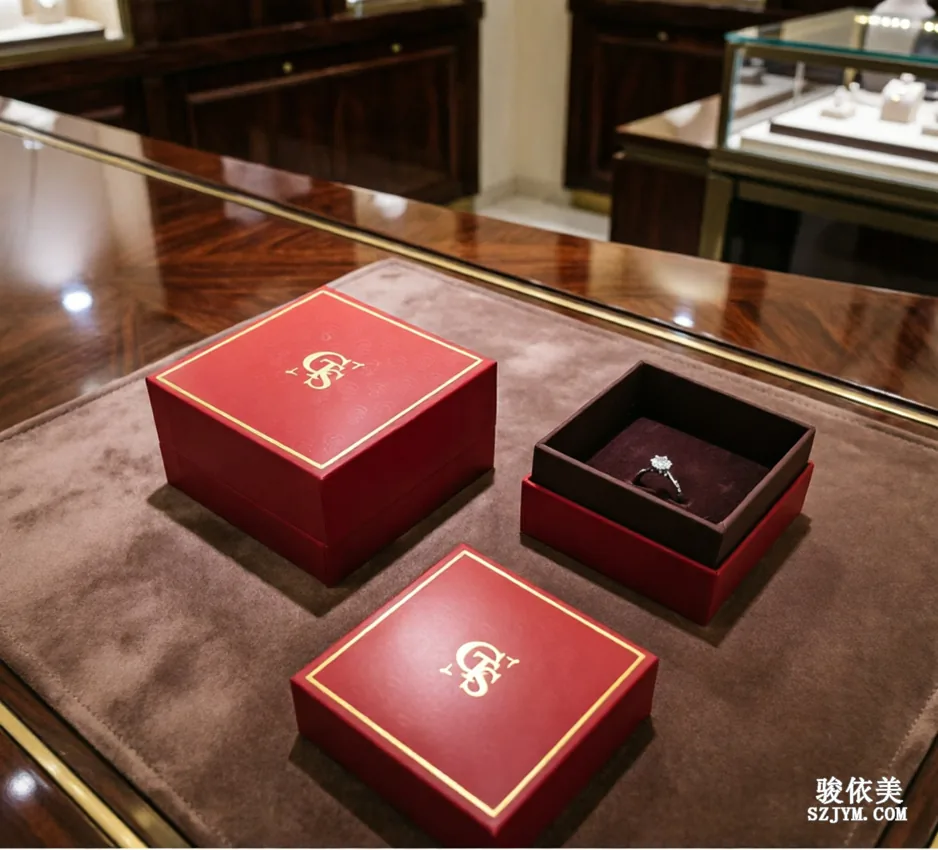 从展会动向反推门店陈列,还有三个细节值得抄作业。其一是灯光分层:展会现场常用顶部主光加柜内补光的双层布光,柜台经营者可以同样给陈列柜划分“主展区”和“过渡区”,主展区用投光强化,过渡区用柔光过渡,货品在一定距离外就能看出层次。其二是动线控制:展会要引导人流按展位顺序走,柜台也一样,把高频试戴的品类放在柜台中段、让顾客自然停留,把偏冷门的高货放在两端,用陈列节奏平衡客流密度。其三是留白与信息平衡:醒目的大字价格牌、品类标识牌在展会里承担导购功能,回到柜台上,适当保留这种“视觉引导牌”,能减少顾客反复询问带来的销售疲劳,也能让新客更快找到自己想要的品类。
展会结束之后,真正拉开差距的往往不是买到了什么,而是有没有把展会上看到的做法带回来。建议经营者回到店里先做三张清单:一张货品清单,标出哪几款可以在展会上对标价格与工艺;一张道具清单,记录展会上让人愿意停留的托盘、灯光与立牌形态;一张话术清单,把展会上讲解硬足金、培育钻石的措辞整理下来,培训店员时直接能用。陈列不是一次性的装修,而是跟着每次订货、每个节日不断调整的日常动作,
年末通常是婚庆与礼赠的高峰,上海展的“真金”主题与跨年消费节奏相呼应。对柜台经营者来说,展会给出的是选品与陈列的方向感:黄金守稳、钻石求新、定制加分。看完展会回来,不必急着大改柜台,可以先从灯光、托盘、标识三件小事入手,把主推货品的“舞台感”做出来;再根据展会订单的反馈,逐步调整货品结构与陈列比重。陈列跟着行情走,柜台才能跟着客流走深圳骏依美专注珠宝陈列与柜台道具,可提供展柜、托盘、展示架等全套陈列方案,欢迎结合门店实际需求咨询定制。
Gold consumption is the first main line. Gold buying has remained a year-round hotspot in 2026, and the fair's first highlight is one-stop gold shopping. A volatile but high gold price has not cooled demand; it has made customers pickier, weighing both weight and craftsmanship. Under such conditions, counter display should shift from "stacking more" to "explaining clearly": gold counters do not need to be packed to the brim, but should leave enough visual breathing room so that customers spot hard-pure-gold, ancient-method gold and fancy-set pieces at first glance, rather than a counter of identical pendants. A combination of low trays and mid-height vertical stands lets weight, craftsmanship and style information be clearly readable whether customers bend down or look straight ahead, and helps sales staff complete the "introduce-try on-close" flow at one height.
The fair has a special background this year: the resilience of traditional Chinese gold jewelry consumption and the rapid rise of the lab-grown diamond category are the two hottest industry topics, and both will appear at the same show. Unlike previous years, a dedicated lab-grown diamond hall opens for the first time, and the Henan delegation will showcase laboratory-grown stones, fancy cuts and value-for-money bridal rings; meanwhile brands such as Laofengxiang and Laomiao Gold continue their popularity, investing further in hard-pure-gold, ancient-method gold and filigree craftsmanship. Small and medium retailers do not need to walk the whole floor: follow two threads — new designs and the workmanship-fee system in gold, and categories and price bands in lab-grown diamonds — and the visit becomes much more efficient.
Lab-grown diamonds add a new variable. Their average price is much lower than natural stones of the same specification, with lighter weight and more diverse settings, appealing to young customers who value value-for-money and design. Display should therefore amplify craftsmanship and design rather than scarcity: use small spotlights or accent lamps to bring out the brilliance of the main stone, dark velvet pads to enhance the brightness of white stones, and make style cards and price tags more visible. The on-site "Shanghai Custom-Made" zone supports on-the-spot design and setting, showing that consumers increasingly pay for exclusivity. A "customizable" display position with a blank pad plus a sample can trigger more inquiries than a fully stocked counter.
Three details from the fair are worth copying in store. First, layered lighting: the fair combines top key light with in-counter fill light; retailers can similarly divide counters into a hero zone and a transition zone, using spotlights for the former and soft light for the latter. Second, traffic flow: the fair guides visitors along a route, and counters should place frequently-tried categories in the middle section to naturally hold customers, while putting slow-moving premium items at both ends. Third, white space and information balance: bold price boards and category signs play a navigation role at the fair; keeping a few such visual guides in store reduces fatigue from repeated inquiries and helps new customers find what they want.
After the fair, what separates winners is rarely what they bought, but whether they brought ideas back. Shop owners should make three lists: a product list marking which items can be benchmarked against the fair for price and craftsmanship; a props list recording the trays, lighting and stands that made people stop; and a sales-script list capturing how exhibitors explained hard pure gold and lab-grown diamonds, ready for staff training. Display is not a one-off renovation but a daily practice adjusted with every order and every festival; the fair simply offers a chance to observe all competitors at once. Turn observations into lists, and lists into actions, and the counter will change in ways customers notice next peak season.
The year-end season usually peaks in weddings and gifting, and the fair's "true gold" theme echoes the countdown to New Year consumption. The fair offers direction for selection and display: keep gold stable, innovate with diamonds, and add value through customisation. After visiting, do not rush to overhaul the counter; start with lighting, trays and signage to build a stage for hero products, then adjust the product mix gradually based on order feedback. Display should follow the market, and the counter will then follow the traffic. Shenzhen Junyimei focuses on jewelry display and counter props, offering display cabinets, trays and stands, and welcomes custom consultations. 2026上海国际珠宝展将于11月13日至16日在上海世博展览馆举行,本届展会以“传承·创新·共鉴真金”为主题,老凤祥、老庙黄金、中国黄金、今亚珠宝等一线品牌将集中亮相,河南培育钻石展团首次组团登陆申城,现场还将随机抽取100颗一克拉培育钻石送给观众。对珠宝零售而言,这场年末大展不仅是采购与订货的窗口,更是观察明年陈列趋势、货品结构与消费心理的风向标,
先看黄金消费这条主线。2026年以来黄金消费持续升温,成为贯穿全年的热点,展会看点的第一项就是“一站式购金”。金价高位震荡并没有浇灭消费热情,而是让顾客更挑剔:既要克重实在,又要工艺值回工费。柜台陈列在这样的行情下,重心要从“堆得多”转向“讲得清”——黄金货柜不必把货摆到密不透风,反而要留出足够的视线落脚点,让顾客第一眼看到的是当季主推的硬足金、古法金与镶嵌款,而不是一柜子看不出差异的同款吊坠。低位托盘加中位竖展的组合,能让克重、工费和款式信息在顾客弯腰与平视两个角度都清晰可达,也方便销售在同一高度内完成“介绍-试戴-成交”的连贯动作。
先说说这场展会的特殊背景:中国传统金饰消费的韧性与培育钻石品类的快速崛起,是今年行业讨论最热烈的两个话题,而它们恰好都集中出现在同一场展会上。与往年不同,本届展会首次设立培育钻石专馆,河南培育钻石展团的集体亮相,将把实验室培育石、异形钻切工与高性价比婚戒推向台前;而老凤祥、老庙黄金等品牌今年也在硬足金、古法金等主打工艺上加大投入。对中小零售门店来说,不必跑遍全场,只需抓住两条线索:黄金看新款设计与工费体系,钻石看培育品类与价格带,逛展效率会高很多。
再看培育钻石给陈列带来的新变量。培育钻石首饰的客单价普遍低于同规格天然钻,克重更轻、镶嵌工艺更多样,目标客群集中在看重“性价比+设计感”的年轻人。这类货品的柜台陈列,重点不在强调稀缺,而在放大工艺与设计:用小面积的点光源或展台射灯突出主石的切面火彩,用深色绒托衬托白钻的明亮度,同时把款式卡、价格卡做得更醒目。展会现场“上海定制”专题支持现场设计、现场镶嵌,说明消费者越来越愿意为“专属感”买单——柜台上如果能留出一两个“可定制”的展示位,用空白展台加样品示意,反而比摆满现货更能触发咨询。
从展会动向反推门店陈列,还有三个细节值得抄作业。其一是灯光分层:展会现场常用顶部主光加柜内补光的双层布光,柜台经营者可以同样给陈列柜划分“主展区”和“过渡区”,主展区用投光强化,过渡区用柔光过渡,货品在一定距离外就能看出层次。其二是动线控制:展会要引导人流按展位顺序走,柜台也一样,把高频试戴的品类放在柜台中段、让顾客自然停留,把偏冷门的高货放在两端,用陈列节奏平衡客流密度。其三是留白与信息平衡:醒目的大字价格牌、品类标识牌在展会里承担导购功能,回到柜台上,适当保留这种“视觉引导牌”,能减少顾客反复询问带来的销售疲劳,也能让新客更快找到自己想要的品类。
展会结束之后,真正拉开差距的往往不是买到了什么,而是有没有把展会上看到的做法带回来。建议经营者回到店里先做三张清单:一张货品清单,标出哪几款可以在展会上对标价格与工艺;一张道具清单,记录展会上让人愿意停留的托盘、灯光与立牌形态;一张话术清单,把展会上讲解硬足金、培育钻石的措辞整理下来,培训店员时直接能用。陈列不是一次性的装修,而是跟着每次订货、每个节日不断调整的日常动作,
年末通常是婚庆与礼赠的高峰,上海展的“真金”主题与跨年消费节奏相呼应。对柜台经营者来说,展会给出的是选品与陈列的方向感:黄金守稳、钻石求新、定制加分。看完展会回来,不必急着大改柜台,可以先从灯光、托盘、标识三件小事入手,把主推货品的“舞台感”做出来;再根据展会订单的反馈,逐步调整货品结构与陈列比重。陈列跟着行情走,柜台才能跟着客流走深圳骏依美专注珠宝陈列与柜台道具,可提供展柜、托盘、展示架等全套陈列方案,欢迎结合门店实际需求咨询定制。