Anti-Slip Details for Counter Props: How Trays, Sign Holders and Displays Stay Put柜台道具的防滑细节:托盘、立牌与展示件怎么抓得牢
Counter props are not afraid of aging so much as of slipping. When a customer reaches for a ring in a tray, the tray shifts with a light touch; a sign holder knocked by a sleeve tips over onto the merchandise; a display piece on a smooth glass surface turns with the slightest nudge. None of these small motions matters alone, but after dozens of customers a day, props keep moving, tilting and falling out of place. The counter begins to look messy, and the perceived value of the goods drops with it. In jewelry display, anti-slip is never a finishing touch; it is the basic skill of staying put. Trays must grip the countertop, sign holders must stand steady, and display holders must bite the merchandise.
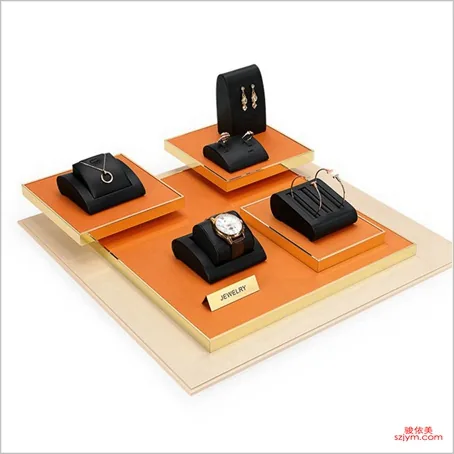 Start with how trays grip the countertop. The surface-marble, glass or lacquered wood-decides the solution. Marble and glass are the slipperiest: attach silicone or rubber feet to the tray bottom, one at each corner, so pressure is even and a light push does not make the whole tray slide. Lacquered wood offers decent friction, so trays with flocked or cork bases work well, protecting the finish at the same time. The inside of the tray needs anti-slip too. Short-flock velvet liners are the first choice: rings and earrings sink lightly into the pile instead of sliding to the edge. For hard-bottom trays, add a silicone grid pad, or divide the tray into compartments so rings, pendants and earrings are separated and held in place. Also mind the tray rim: if it stands slightly higher than the inner base, pieces that reach the edge are stopped instead of dropping off the tray.
Sign holders are the props most likely to fall. They are small with a high center of gravity, and on a marble counter they tip almost as soon as they are touched. When choosing sign holders, look at the base first: wide, heavy bases (thick acrylic or weighted metal) are naturally stable, while slender tall stands should be avoided however good they look. On smooth surfaces, stick silicone pads under the base as well. For magnetic bases, you can embed a magnetic strip under the countertop or use a tray with a built-in magnetic plate, so the holder is attracted to the tray rather than relying on weight alone. Position matters just as much: do not place holders in aisles or within reach of elbows; keep them toward the inner side of the counter, close to the display they explain. In busy periods, pull both goods and holders inward to reduce accidental contact. Favor flat or tilted label formats over vertical ones-a vertical holder in peak hours will almost certainly end up leaning or fallen.
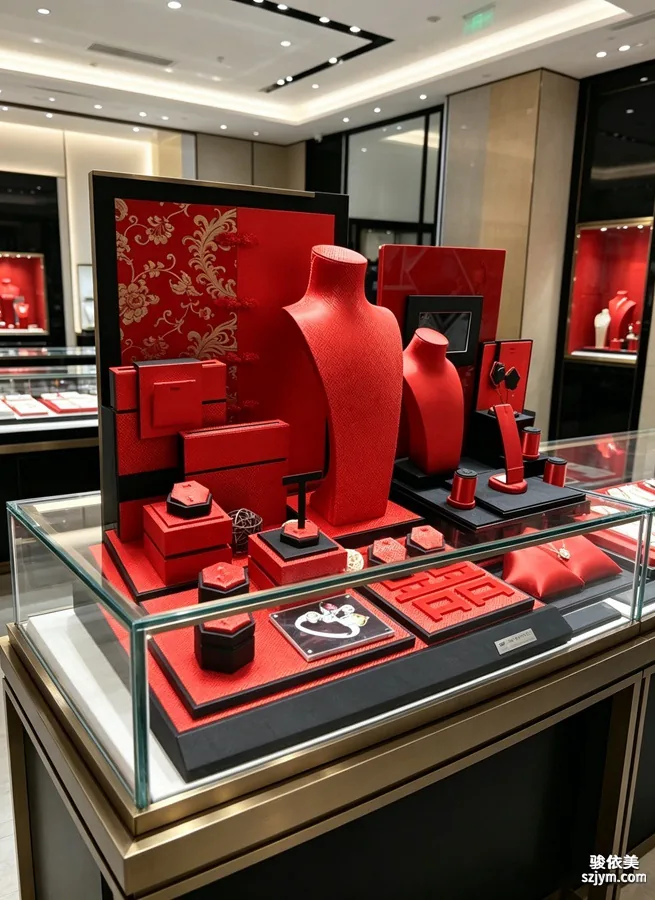 Display holders must bite the merchandise, and that comes from slots, not from placement. A ring stand is not just a place to put a ring: choose a holder whose slot matches the ring band, so the band clicks into the groove with the front slightly raised and the ring cannot slide off by itself. For necklaces, choose racks with hooks or clips, so the clasp hangs on the hook and the chain does not drift away with air currents or sleeves. For pendants, slotted boards let the bail sit in the groove with only the body exposed. For bracelets, choose open foam holders or velvet stands with grooves, so the bangle sinks into the slot and does not roll off when touched. Fixing props to the surface matters too: small display pieces inside a counter can be secured with a short strip of double-sided tape or Blu-Tack to the tray or countertop. Once positioned, do not move them often; a fixed display looks more professional than one that is always being rearranged.
Daily upkeep matters more than the initial setup. Spend two minutes before opening to check: whether the silicone feet on tray bottoms have come off or hardened, whether sign holder bases are loose, and whether display slots are blocked by lint or have lost their grip. Wash silicone pads in warm water and air-dry them to restore stickiness. If velvet liners pilled, brush them gently along the pile direction with a soft brush. Replace double-sided tape and Blu-Tack regularly before they dry out. Do a full weekly inspection: put displaced props back, repair loose slots and replace worn pads. Re-check before and after peak hours, since props shift most when the store is crowded. Restore trays, holders and displays to their places at closing, and the counter opens the next morning tidy, steady and fully in place.
Anti-slip costs almost nothing but pays off directly. When props stay put, the counter stays orderly; when the counter is orderly, the customers' attention stays on the merchandise. Fix every prop in its proper place, and the counter grips its goods, which is one small step toward gripping the sale.柜台道具最怕的不是旧,而是“滑”。客人伸手去取托盘里的戒指,托盘在台面上轻轻一蹭就移了位;立牌被衣袖一带,歪倒在货品上;展示件放在光滑的玻璃面上,稍微一碰就转了方向。这些小动作单次都不起眼,但一天几十位客人下来,道具移位、倾倒、错位反复发生,柜台看起来就乱,货品的价值感也跟着掉。珠宝陈列里,防滑从来不是锦上添花,而是“抓得牢”三个字的基本功:托盘要抓得住台面,立牌要站得稳当,展示件要咬得住货品。
先解决托盘怎么抓得住台面。台面是大理石、玻璃还是烤漆木板,决定了防滑方案。大理石和玻璃台面最滑,托盘底部要加贴硅胶垫或橡胶脚垫,四角各贴一片,受力均匀,轻轻一推不会整体滑动;烤漆木板台面本身摩擦适中,托盘底部可选用带植绒或软木垫的款式,既防滑又不划伤漆面。托盘内部同样要防滑:绒布内衬首选短绒植绒,戒指、耳钉放进去能浅浅陷进绒面,不会随重力滑到盘边;硬底托盘要加一层防滑硅胶网格垫,或者按货品种类分区,用格槽把戒指、吊坠、耳钉分开卡住。还要注意托盘托边的高度,托边略高于盘内底面,货品滑到边缘时能被托边挡住,不会直接掉出盘外。
立牌是柜台里最容易“倒”的道具。立牌体积小、重心高,摆在大理石台面上几乎一碰就倒。选立牌时优先看重心设计:底座够宽、够重的立牌(亚克力厚底座或金属加重底座)天生稳定,细脚高座的立牌再好看也尽量少用。台面若光滑,立牌底座底部同样贴硅胶垫;若是磁吸式底座,可在台面下预埋磁条,或选用自带磁板的托盘,把立牌吸在托盘上,比单纯压重更可靠。立牌的摆放位置也有讲究:不要放在通道侧和顾客手肘能扫到的区域,尽量靠柜台里侧、靠近陈列主体的位置;人流量大的时候,立牌跟着货品一起靠里收,减少被碰到的概率。陈列标签优先用“躺式”或斜插式,慎用竖立式,竖立式在高峰时段几乎必然东倒西歪。
展示件要“咬得住”货品,靠的是卡位而不是摆放。戒指托不是把戒指随手放上去,而是要选卡槽与戒圈匹配的托架,戒臂能刚好卡进槽内,前端微微抬起,客人取放时戒指不会自行滑落。项链展示要选带钩或带夹的挂架,链扣挂在钩上后自然下垂,不会被气流或衣袖带跑;吊坠展示件可选开槽式托板,坠头嵌入槽内,只露出坠体。手镯展示件选开口泡沫托或带卡位的绒面托,镯体卡进凹槽,不会在客人触碰时从托上滚落。展示件的防滑还要看它和台面的固定关系:柜台内的小型展示件,可以用一小条双面胶或蓝丁胶固定在托盘或台面上,位置稳定后不要频繁挪动,固定的展示件比随时可移动的展示件更显专业。
台面材质不同,防滑垫的选材也要跟着变:硅胶垫耐脏耐用,适合平面台面;透明防滑膜视觉上几乎隐形,适合玻璃柜面;软木垫摩擦力适中又显质感,适合木质台面。
台面材质不同,防滑垫的选材也要跟着变:硅胶垫耐脏耐用,适合平面台面;透明防滑膜视觉上几乎隐形,适合玻璃柜面;软木垫摩擦力适中又显质感,适合木质台面。
防滑的日常维护,比一次性布置更重要。每天开门前花两分钟检查:托盘底部硅胶垫有没有脱落或老化变硬,立牌底座是否松动,展示件卡槽是否被绒屑堵住、卡力是否变松。硅胶垫用温水清洗后自然晾干,粘性会恢复;绒布内衬如有起球,用软毛刷顺绒方向轻刷;双面胶和蓝丁胶定期更换,防止干化后失去粘性。每周做一次整体巡检,把位移过的道具归位,把松动的卡槽修好,把磨损的硅胶垫补齐。高峰期前后重点复查:人流大时道具最容易移位,闭店前把托盘、立牌、展示件逐一归位,第二天开门又是一个整齐、稳当、抓得牢的柜台。
防滑这件事投入极小,产出却直接:道具不乱动,柜台自然齐整;柜台齐整,顾客的注意力就都在货品上。把每一件道具都固定在该在的位置,柜台抓得牢,成交也就抓得牢。
Start with how trays grip the countertop. The surface-marble, glass or lacquered wood-decides the solution. Marble and glass are the slipperiest: attach silicone or rubber feet to the tray bottom, one at each corner, so pressure is even and a light push does not make the whole tray slide. Lacquered wood offers decent friction, so trays with flocked or cork bases work well, protecting the finish at the same time. The inside of the tray needs anti-slip too. Short-flock velvet liners are the first choice: rings and earrings sink lightly into the pile instead of sliding to the edge. For hard-bottom trays, add a silicone grid pad, or divide the tray into compartments so rings, pendants and earrings are separated and held in place. Also mind the tray rim: if it stands slightly higher than the inner base, pieces that reach the edge are stopped instead of dropping off the tray.
Sign holders are the props most likely to fall. They are small with a high center of gravity, and on a marble counter they tip almost as soon as they are touched. When choosing sign holders, look at the base first: wide, heavy bases (thick acrylic or weighted metal) are naturally stable, while slender tall stands should be avoided however good they look. On smooth surfaces, stick silicone pads under the base as well. For magnetic bases, you can embed a magnetic strip under the countertop or use a tray with a built-in magnetic plate, so the holder is attracted to the tray rather than relying on weight alone. Position matters just as much: do not place holders in aisles or within reach of elbows; keep them toward the inner side of the counter, close to the display they explain. In busy periods, pull both goods and holders inward to reduce accidental contact. Favor flat or tilted label formats over vertical ones-a vertical holder in peak hours will almost certainly end up leaning or fallen.
Display holders must bite the merchandise, and that comes from slots, not from placement. A ring stand is not just a place to put a ring: choose a holder whose slot matches the ring band, so the band clicks into the groove with the front slightly raised and the ring cannot slide off by itself. For necklaces, choose racks with hooks or clips, so the clasp hangs on the hook and the chain does not drift away with air currents or sleeves. For pendants, slotted boards let the bail sit in the groove with only the body exposed. For bracelets, choose open foam holders or velvet stands with grooves, so the bangle sinks into the slot and does not roll off when touched. Fixing props to the surface matters too: small display pieces inside a counter can be secured with a short strip of double-sided tape or Blu-Tack to the tray or countertop. Once positioned, do not move them often; a fixed display looks more professional than one that is always being rearranged.
Daily upkeep matters more than the initial setup. Spend two minutes before opening to check: whether the silicone feet on tray bottoms have come off or hardened, whether sign holder bases are loose, and whether display slots are blocked by lint or have lost their grip. Wash silicone pads in warm water and air-dry them to restore stickiness. If velvet liners pilled, brush them gently along the pile direction with a soft brush. Replace double-sided tape and Blu-Tack regularly before they dry out. Do a full weekly inspection: put displaced props back, repair loose slots and replace worn pads. Re-check before and after peak hours, since props shift most when the store is crowded. Restore trays, holders and displays to their places at closing, and the counter opens the next morning tidy, steady and fully in place.
Anti-slip costs almost nothing but pays off directly. When props stay put, the counter stays orderly; when the counter is orderly, the customers' attention stays on the merchandise. Fix every prop in its proper place, and the counter grips its goods, which is one small step toward gripping the sale.柜台道具最怕的不是旧,而是“滑”。客人伸手去取托盘里的戒指,托盘在台面上轻轻一蹭就移了位;立牌被衣袖一带,歪倒在货品上;展示件放在光滑的玻璃面上,稍微一碰就转了方向。这些小动作单次都不起眼,但一天几十位客人下来,道具移位、倾倒、错位反复发生,柜台看起来就乱,货品的价值感也跟着掉。珠宝陈列里,防滑从来不是锦上添花,而是“抓得牢”三个字的基本功:托盘要抓得住台面,立牌要站得稳当,展示件要咬得住货品。
先解决托盘怎么抓得住台面。台面是大理石、玻璃还是烤漆木板,决定了防滑方案。大理石和玻璃台面最滑,托盘底部要加贴硅胶垫或橡胶脚垫,四角各贴一片,受力均匀,轻轻一推不会整体滑动;烤漆木板台面本身摩擦适中,托盘底部可选用带植绒或软木垫的款式,既防滑又不划伤漆面。托盘内部同样要防滑:绒布内衬首选短绒植绒,戒指、耳钉放进去能浅浅陷进绒面,不会随重力滑到盘边;硬底托盘要加一层防滑硅胶网格垫,或者按货品种类分区,用格槽把戒指、吊坠、耳钉分开卡住。还要注意托盘托边的高度,托边略高于盘内底面,货品滑到边缘时能被托边挡住,不会直接掉出盘外。
立牌是柜台里最容易“倒”的道具。立牌体积小、重心高,摆在大理石台面上几乎一碰就倒。选立牌时优先看重心设计:底座够宽、够重的立牌(亚克力厚底座或金属加重底座)天生稳定,细脚高座的立牌再好看也尽量少用。台面若光滑,立牌底座底部同样贴硅胶垫;若是磁吸式底座,可在台面下预埋磁条,或选用自带磁板的托盘,把立牌吸在托盘上,比单纯压重更可靠。立牌的摆放位置也有讲究:不要放在通道侧和顾客手肘能扫到的区域,尽量靠柜台里侧、靠近陈列主体的位置;人流量大的时候,立牌跟着货品一起靠里收,减少被碰到的概率。陈列标签优先用“躺式”或斜插式,慎用竖立式,竖立式在高峰时段几乎必然东倒西歪。
展示件要“咬得住”货品,靠的是卡位而不是摆放。戒指托不是把戒指随手放上去,而是要选卡槽与戒圈匹配的托架,戒臂能刚好卡进槽内,前端微微抬起,客人取放时戒指不会自行滑落。项链展示要选带钩或带夹的挂架,链扣挂在钩上后自然下垂,不会被气流或衣袖带跑;吊坠展示件可选开槽式托板,坠头嵌入槽内,只露出坠体。手镯展示件选开口泡沫托或带卡位的绒面托,镯体卡进凹槽,不会在客人触碰时从托上滚落。展示件的防滑还要看它和台面的固定关系:柜台内的小型展示件,可以用一小条双面胶或蓝丁胶固定在托盘或台面上,位置稳定后不要频繁挪动,固定的展示件比随时可移动的展示件更显专业。
台面材质不同,防滑垫的选材也要跟着变:硅胶垫耐脏耐用,适合平面台面;透明防滑膜视觉上几乎隐形,适合玻璃柜面;软木垫摩擦力适中又显质感,适合木质台面。
台面材质不同,防滑垫的选材也要跟着变:硅胶垫耐脏耐用,适合平面台面;透明防滑膜视觉上几乎隐形,适合玻璃柜面;软木垫摩擦力适中又显质感,适合木质台面。
防滑的日常维护,比一次性布置更重要。每天开门前花两分钟检查:托盘底部硅胶垫有没有脱落或老化变硬,立牌底座是否松动,展示件卡槽是否被绒屑堵住、卡力是否变松。硅胶垫用温水清洗后自然晾干,粘性会恢复;绒布内衬如有起球,用软毛刷顺绒方向轻刷;双面胶和蓝丁胶定期更换,防止干化后失去粘性。每周做一次整体巡检,把位移过的道具归位,把松动的卡槽修好,把磨损的硅胶垫补齐。高峰期前后重点复查:人流大时道具最容易移位,闭店前把托盘、立牌、展示件逐一归位,第二天开门又是一个整齐、稳当、抓得牢的柜台。
防滑这件事投入极小,产出却直接:道具不乱动,柜台自然齐整;柜台齐整,顾客的注意力就都在货品上。把每一件道具都固定在该在的位置,柜台抓得牢,成交也就抓得牢。