How to Light a Jewelry Cabinet: Three Layers, One Temperature, Then Aim珠宝展柜灯光怎么配:分三层、定色温、再打光
In a jewelry display cabinet, the lighting speaks before the merchandise does. This article covers how to plan cabinet lighting: how many circuits, which color temperature, and how to aim the lights so the pieces look premium without dazzling the customer.
Good cabinetry lighting works in at least three layers: ambient light, main cabinet light, and accent light. Ambient light comes from ceiling downlights or track lights; it brightens the whole space so people can move and see the counter outlines comfortably. Its color temperature is usually 3000-3500K, warm-toned for a cozy feel. The main cabinet light comes from LED strips or in-cabinet spotlights; it illuminates the pieces themselves and brings out the metal luster and gem fire, running slightly cooler at 3500-4000K, white with a touch of warmth, which flatters silver and rose gold best. Accent light comes from narrow-beam spotlights that hit only one hero piece or one key row, making it pop out from the whole counter.
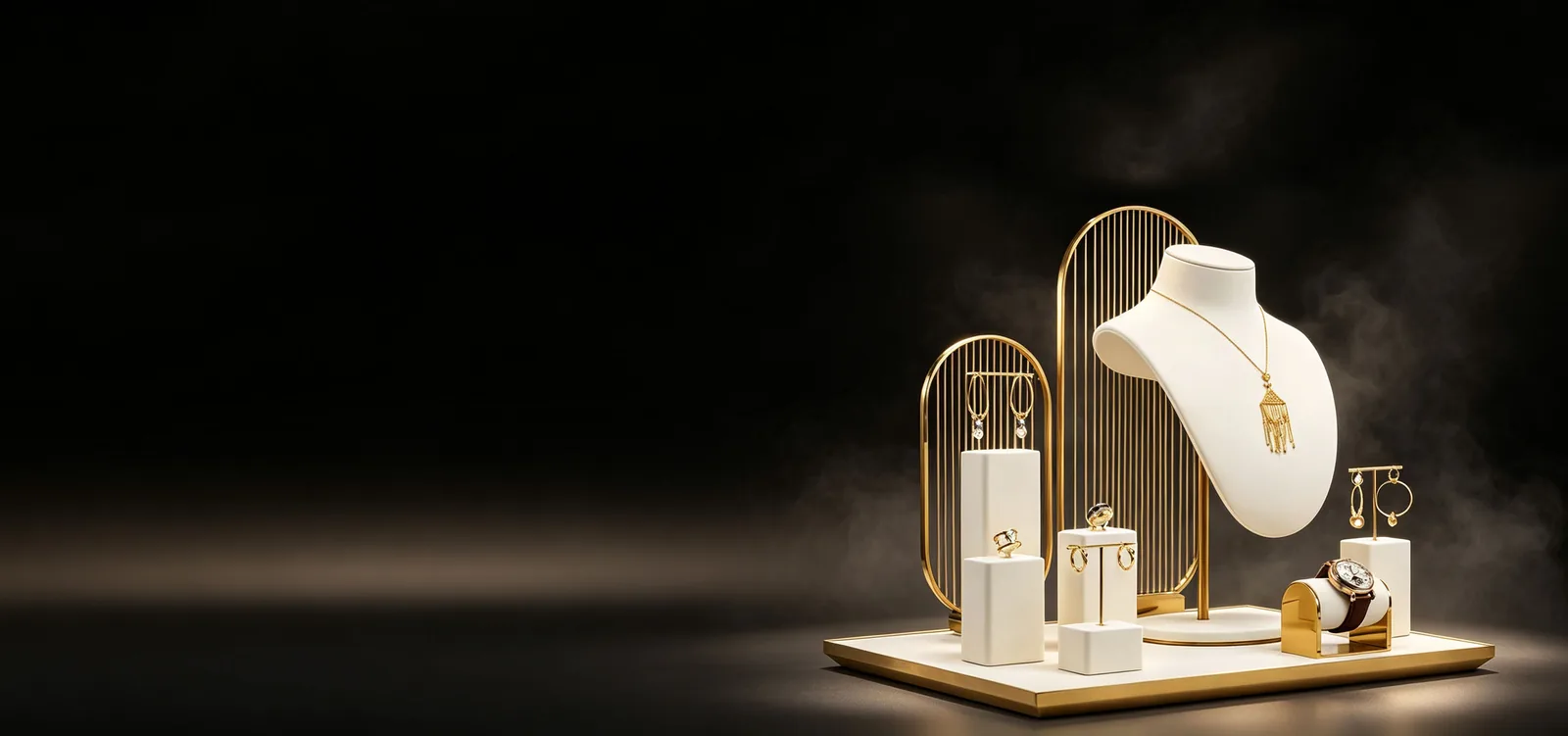
Color temperature selection follows a simple rule. The most common mistake is one temperature across the whole counter: warm pieces lit with cold light, white pieces lit with warm light. Silver, platinum and white diamonds prefer cooler light around 4000K, which makes the metal look crisper. Gold, rose gold and colored stones prefer warmer light at 3000-3500K for richer colors. If a counter holds both silver and gold, set one main temperature for the hero merchandise and compensate locally with accent light: the main temperature covers the large area, the accent light covers the star piece, and the two circuits divide the goods into primary and secondary.
Color rendering index (CRI) is the parameter most stores ignore. CRI measures how faithfully a light source reproduces true colors, on a scale of 100. Jewelry counters should run at CRI 90 or above. Below 90, rubies look dull, jade looks gray, and gold looks washed out. Do not buy lights on color temperature alone; check the CRI on the packaging. Five points of CRI difference is one full grade of perceived quality.
Aiming matters as much as color. The main light should come from the front upper side at about 45 degrees so the front of each piece catches light and shows depth. Side lights fill in from both flanks to define the side profiles. Bottom light should be used sparingly, only for hollow or openwork pieces, or the merchandise seems to float. The worst case is direct top light: the shadow falls on the piece itself, the metal glares, and the gem fire gets crushed. Stores with adjustable light bars should move them from straight overhead to 45 degrees from the front; the effect is immediate.
More lights are not better. Cabinet LED strips generally run at three to four diodes per meter; denser means a flat, hot counter, sparser means visible dark bands. Spotlights are usually set to a 20-30 degree beam that covers only the hero zone, without overlapping rings. Overlapping beams dilute the hero position. Keep some shadow to set off the highlights: lighting is not meant to turn the cabinet into daylight, but to bring the piece out of the dark.
Different cabinet types need different treatments. A tall necklace cabinet, around 1.8 meters high, puts the goods at eye level; light should come from the front top inward so every link of a chain is visible, and the top strip needs a diffuser to avoid hot spots on the glass. A low counter holds rings and earrings; customers bend down to look, so light should come from the rear of the cabinet toward the front, keeping the pieces lit without glaring into the eyes. Dim the rear strip and keep the front zone bright or reflections will overpower the goods. Wall cabinets work like small stages: give every shelf its own circuit, mount a thin strip along the front edge of each shelf to light the shelf below, and add a small backlight on tall shelves so the pieces have profile from behind.
Finally, group the light switches. Daytime needs differ from evening hours: when daylight is strong, only the hero circuit needs to run; when evening comes, switch on ambient and accent circuits one by one. A single master switch either flattens the counter in daylight or leaves the hero zone dark at night. Ask the electrician to split circuits: one for ambient, one for main cabinet light, one for accent spots, operated separately. Some stores add photocell sensors so the light auto-compensates as daylight fades; by the time a customer walks in, the lighting has already arranged the merchandise in order of appearance.
Lighting decays over time, losing roughly 20-30 percent of output after a year while color temperature drifts. Measure each layer with a lux meter every six months and compare with the initial readings; replace strips and spotlights in complete sets every year, because swapping a few diodes leaves the counter inconsistent. Spend the money on color temperature and CRI rather than on quantity. With good lighting, customers do not need to ask the price to know the store sells quality pieces.
珠宝展柜里的灯光,是比货品本身更早开口说话的东西。这一篇讲讲珠宝展柜灯光怎么配:分几路、什么色温、怎么打,让货显贵,让柜台不刺眼。
先说灯光的层次。一间合格的珠宝展柜,灯光至少分三层:环境光、柜内主光和局部点缀光。环境光来自天花板的筒灯或轨道灯,负责把整个空间照亮,让人舒服地走动、看清柜台轮廓,色温一般用三千到三千五百开尔文,偏暖,营造温馨感。柜内主光是灯带或柜内射灯,负责照亮货品本身,让首饰的金属光泽和宝石火彩显出来,色温略高,用三千五百到四千开尔文,白中带暖,最衬银饰和玫瑰金。局部点缀光则是射灯、小角度聚光,只照某一件主打货或某一排主推位,让它在整柜货品中第一个跳出来。
再说色温怎么选。珠宝柜台最常见的错误是整柜一种色温到底,暖货冷光、白货暖光,怎么看都不对劲。原则很简单:银饰、铂金、白钻用偏冷的光,色温四千开尔文左右,金属本色更透亮;黄金、玫瑰金、彩宝用偏暖的光,三千到三千五百开尔文,颜色更饱满。如果柜台里既有银饰又有黄金,那么就按主推货品定一个主色温,再在局部用点缀光做补偿——主色温管大面,点缀光管主角,两路灯光一搭,货就分出了主次。
还有显色指数,这是很多门店最容易忽略的参数。显色指数(CRI)衡量灯光还原物体真实颜色的能力,满分一百。珠宝柜台至少要九十以上,低于九十的灯,红宝石会显暗、翡翠会显灰、金饰会显淡,货品的真实色彩全被灯光吃掉了。买灯的时候不要只看色温,更要看显色指数;同一个柜台的灯,显色指数差五个点,观感就差一个档次。这个参数写在灯具包装上,采购时多看一眼,货就少一分色差。
再讲灯光怎么打。光线方向有讲究:主光从前上方四十五度打下来,让货正面受光有立体感;侧光从两侧补进来,让侧面轮廓清楚;底光慎用,除非展镂空货,否则货会显得飘。最怕顶光直射,影子压在货身上,金属反光刺眼,宝石火彩全被压掉。灯位能调的店,先把顶光移到前上方四十五度,效果立刻不一样。
灯光的数量也有讲究,不是越多越好。柜内灯带一般做成一米三到四颗灯珠的密度,太密了整柜发白、货品灼热,太疏了柜内出现明暗断层。射灯的角度一般调到二十到三十度,只覆盖主推位那一片区域,不要让射灯的光圈重叠太多。光圈重叠,两个亮斑互相干扰,反而把主推位的存在感稀释了。留一点暗,才能衬出亮;灯光不是用来把柜台照成白天,而是用来把货品从黑夜中请出来。
不同柜型的灯光打法也不一样。立式项链柜高约一米八,货品正在客人视线高度,灯光从柜前上方向内打,让项链整条受光、每环都看得清;顶部灯带要加柔光板,避免光点印在玻璃上。坐式矮柜放戒指、耳钉小件,客人俯身看,灯光从柜内后侧斜打,让货品正面受光、不直射客人眼睛;柜内深处灯带调暗,只留前区主光,否则反光压过货品。挂墙柜的层板像舞台,每层单独一路灯,层板前沿装细灯带向下照,下一层边缘立刻分明;层板间距高的,可在每层后壁补小射灯,让货品背光也有轮廓。
最后说日常维护。灯光会衰减,一年后照度普遍降两三成,色温也会漂移。建议每半年用照度计测一次,与初装对比;每年成组更换灯带和射灯,单换几颗灯珠会让整柜色温不均。灯光这件事,钱要花在色温和显色指数上,而不是数量上——灯光配得好,客人走进来不用问价格,就先觉得这家店的货值钱。
还有一个常被忽略的细节:灯光开关要分组。早晚接待模式不同:白天自然光充足,柜内可只开主推位一路;傍晚天色暗下来,再逐路打开环境光和点缀光。全合成一个开关,白天全开费电又显平,晚上全关又漏掉主推位。建议电工按回路分组:环境光、柜内主光、点缀射灯各一路,分开装,按需开。有的店加了照度感应,自然光暗到一定程度自动补光,客人一进门,灯光已替货排好出场顺序。