Pearls Are the New Everyday Luxury珍珠复兴进行时
There is a quiet but unmistakable shift happening in fine jewelry, and it is happening around a gemstone that spent decades being quietly filed under 'for your mother' or 'for the wedding.' In 2026, the pearl is back — not as an heirloom pulled from a velvet box once a year, but as a piece of everyday luxury that Gen Z and Millennials are actually wearing. This is not nostalgia. It is a structural repositioning, and the numbers tell the story better than any mood board.
The data is the clearest signal. At the June 2026 Jewellery & Gem Asia (JGA) show in Hong Kong, official market research found that pearl jewelry led all categories with 37.3% growth, outpacing even precious and designer jewelry. Global market research firms put the pearl jewelry market at roughly USD 15.59 billion in 2026, projected to reach USD 23.02 billion by 2031 at a CAGR of 8.1%. In the United States, data from Edge Retail Academy across nearly 2,000 fine jewelry retailers shows the average pearl retail transaction jumped 35% year-on-year in April 2026, with gross margins hitting 57.6%. That is the signature of quality-led spending, not volume-led discounting.
What is driving this is a redefinition of what a pearl is for. For the past decade, pearls were boxed into formal occasions and an older aesthetic, almost absent from the everyday wardrobe conversation. Design language is dismantling that stereotype. TASAKI's 2026 balance collection recasts pearls through sculptural, architectural lines as daily-wear design statements. Mikimoto's collaboration with Chrome Hearts pulled cultured pearl necklaces into a visibly younger buyer profile. Social media, celebrity street style, and influencers have done the rest, rewriting pearls from 'ceremonial accessory' to 'lifestyle item.' Today, minimalist pearl studs, layered necklaces, and mixed-material designs are mainstream choices for younger consumers.
The more interesting twist is that pearls are accumulating two kinds of value at once: emotional and financial. In India, the Gulf states, and Southeast Asia, jewelry has long functioned as portable savings. Sri Jagdamba Pearls' 2026 Pearl Exchange Program offers 2x appreciation on sets purchased before April 2025, explicitly positioning pearls as a store of wealth akin to gold. As macroeconomic uncertainty persists, natural-material fine jewelry shows remarkable pricing power — Richemont's Jewelry Maisons are projected to deliver EUR 5.0 billion in operating profit at a 30.5% margin in FY2026. Pearls are not yet coequal with diamonds at the very top of the prestige hierarchy, but their organic, sustainable, traceable narrative is building a new kind of trust among affluent buyers.
Sustainability and traceability are the other quiet thread of this revival. The Bain & Hurun wealth report indicates that global high-net-worth individuals have lifted their allocation to jewelry and colored gemstones from 3% three years ago to 8% today. Pearls, with their 'organic, ocean-friendly, digitally traceable' story, map neatly onto Millennial and Gen Z preferences for ethical consumption. The GIA's expanded nacre continuity classification (May 2025) and blockchain-backed authentication are filling the grading gap that long held pearls back — previously they lost out because they lacked the transparent 4C-style benchmark that diamonds enjoy. As consumers learn to read a pearl's provenance like a diamond certificate, the premium space finally opens.
Regionally, Asia-Pacific remains both the production and consumption core, accounting for roughly 44% of global pearl revenue, while India is the fastest-growing national market at over 12% CAGR through 2031, propelled by wedding demand and rising disposable income. North America and Europe stay the luxury consumption centers, with online channels already near a quarter of pearl sales. This 'East cultivates, West consumes, the world streams' loop is turning pearls into a genuinely global everyday item.
Within the category itself, the mix is widening in ways that support the revival. Freshwater pearls account for roughly 48% of global pearl revenue — the largest single segment thanks to affordability and broad acceptance — while necklaces and strands remain the biggest product type at nearly 34% of value in 2025. Premium South Sea, Tahitian, and Akoya pearls still command hefty premiums, but the volume engine is the accessible, design-forward freshwater piece. This democratization is exactly what lets pearls scale from occasional luxury to everyday wardrobe staple without losing their cachet. Brands that invest in trend-forward, cross-cultural designs are rewarded far more than those leaning on legacy formats.
There is also a subtle cultural dimension worth naming. Pearls carry an 'Eastern elegance' that, for decades, Western luxury houses translated into heritage and formality. The 2026 repositioning flips that: independent designers and contemporary labels are using pearls to signal restraint, individuality, and a quiet confidence rather than status display. In an era of loud logos, the pearl's soft glow reads as a deliberate choice — the accessory equivalent of saying nothing and meaning everything. That semantic shift may be the most durable part of the revival, because it is not tied to any single price point or occasion.
None of this means the road is smooth. At the USD 1,000-and-above price tier, pearls face real substitution pressure from diamonds and the 'big three' colored gemstones, which benefit from stronger aspiration scores and decades of brand investment in grading transparency. The pearl's lack of a cut-and-clarity benchmark means consumers cannot benchmark value with the same confidence they grant a certified diamond. Emerging standards — the GIA's nacre work and the CIBJO-aligned Global Pearl Development Community's harmonization — may narrow that gap, but repositioning pearls as coequal to diamonds at the top requires brand investment at a scale few players command. For most brands, the smarter play is not to fight diamonds head-on, but to own the everyday-luxury lane where pearls already win on emotion, versatility, and price accessibility.
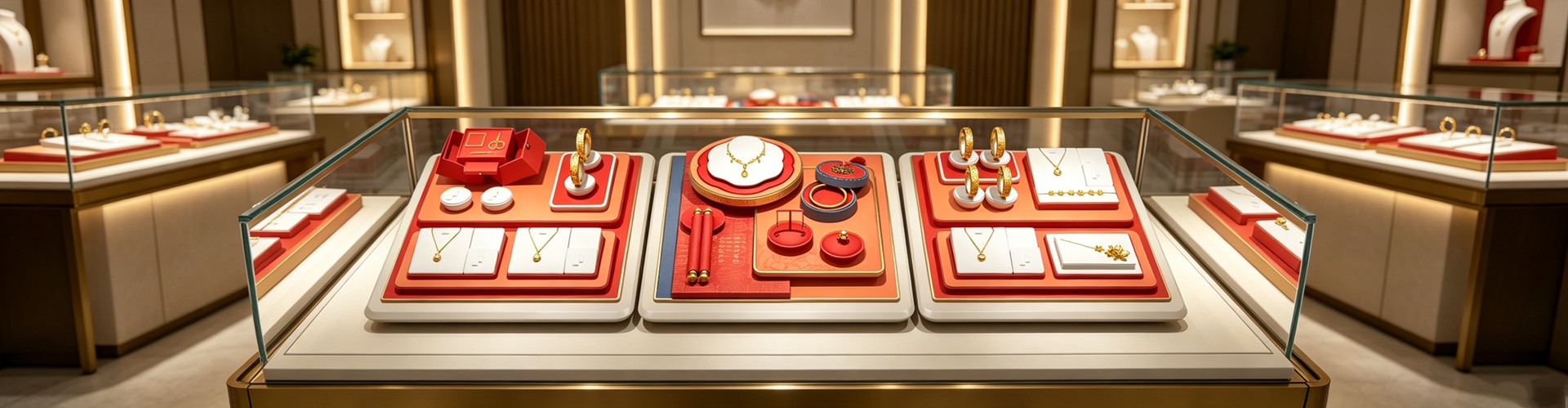
And here is where presentation becomes the unsung hero. The more pearls move into daily life and diverse scenes, the more demanding the 'how it is shown' question becomes. The luster of an Akoya, the orient of a South Sea pearl, the mystery of a Tahitian black — all need the right light and the right cradle to be truly seen. This is where jewelry display props and jewelry display stands earn their keep: great merchandising does not just put jewelry out, it lets each pearl's iridescence speak for itself. From layered in-store showcases to high-definition livestream viewing, from the ritual of gifting to the casual reach of everyday retail, the logic of display decides the pearl's 'first-look' premium.
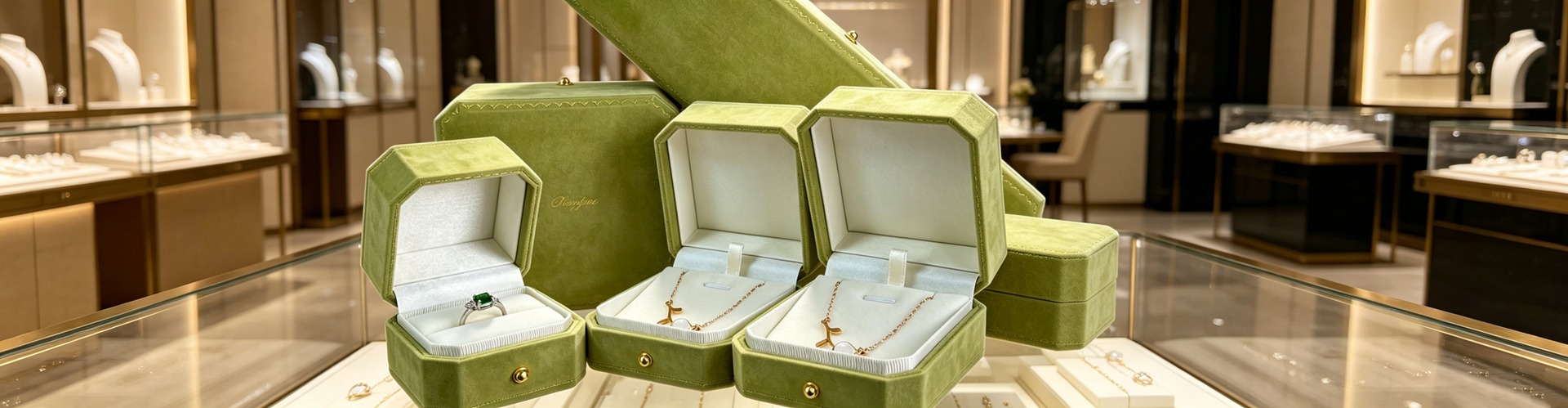
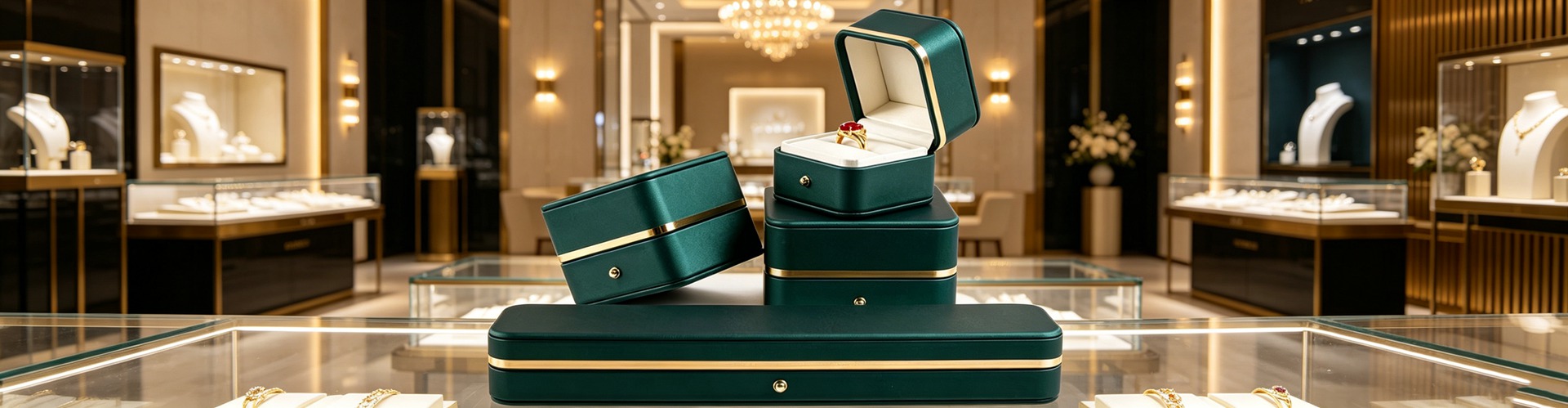
Then there is the moment of taking it home. A jewelry box and its lining matter more than they seem. Pearls are not hard; they scratch, and they dislike acid and alkali. A soft-lined, structurally sound jewelry box is both protection and a silent extension of brand quality. Shenzhen Junyimei has spent years specializing in jewelry packaging design and jewelry box manufacturing, turning these 'invisible details' into a professional system — from material to structure, keeping the pearl dignified in the last meter of delivery. For a brand, packaging is never a mere appendage; it is the second expression of the pearl's glow.
Looking back from the middle of 2026, the pearl revival is not a passing fad. It is a structural repositioning: design makes it everyday, narrative makes it an asset, and presentation and packaging make it premium. As a younger generation stops treating pearls as 'someone else's jewelry,' this category of Eastern elegance is quietly growing back into its own era.
This is original content. Copyright belongs to Shenzhen Junyimei.
Junyimei — present every jewel and timepiece at its best.当一款曾被贴上「妈妈辈专属」「婚礼标配」标签的宝石,重新出现在 Z 世代的耳骨夹与叠戴项链上,你就知道,潮流正在转弯。2026 年,珍珠正在经历一场静默却迅猛的复兴——它不再只是保险箱里的传家物,而是年轻人衣橱里唾手可得的日常奢华。
数据是最诚实的注脚。在 2026 年 6 月的香港珠宝首饰展览会(JGA)上,官方市场调研显示,珍珠首饰以 37.3% 的增速高居所有品类增长榜首,红宝石与珍珠分列宝石品类二三位。而全球市场研究机构的口径更为宏观:珍珠珠宝市场规模预计从 2026 年的 155.9 亿美元,增长至 2031 年的 230.2 亿美元,年复合增长率达 8.1%。在美国,Edge Retail Academy 覆盖近 2000 家精品珠宝商的数据显示,2026 年 4 月珍珠品类平均零售客单价同比大涨 35%,毛利率达到 57.6%——这是典型的质量驱动型消费,而非单纯走量。
这场复兴的底层逻辑,是珍珠「身份」的重新定义。过去十年,它被迫与「正式场合」「长辈审美」绑定,几乎退出了日常穿搭的话语场。但设计语言的迭代正在松动这层刻板印象。TASAKI 在 2026 年推出的 balance 系列,用雕塑感与建筑线条把珍珠重塑为日常佩戴的设计宣言;Mikimoto 与 Chrome Hearts 的联名,则把养殖珍珠项链带到了更年轻的买家群体。社交媒体、明星街拍与 KOL 的推波助澜,更直接把珍珠从「仪式感配饰」改写为「生活方式单品」。今天,极简珍珠耳钉、叠戴项链、混搭材质设计,正成为千禧一代与 Z 世代的日常选择。
更有意思的是,珍珠正在同时获得「情感价值」与「资产属性」的双重背书。在印度、海湾国家与东南亚,珠宝历来是便携的储蓄手段;Sri Jagdamba Pearls 2026 年的珍珠兑换计划,对 2025 年 4 月前购买的套系给出 2 倍增值回购,明确把珍珠定位为类似黄金的财富储存方式。当宏观不确定性加剧,天然材质的高级珠宝展现出惊人的定价韧性——历峰集团珠宝部门在 FY2026 预计实现 50 亿欧元经营利润、30.5% 的毛利率,印证了这一点。珍珠虽未跻身钻石般的顶级资产序列,但它「有机、可持续、可溯源」的叙事,正在高端消费群体中建立新的信任。
可持续与可溯源,是这场复兴另一条隐秘的暗线。贝恩与胡润的财富报告指出,全球高净值人群在珠宝与彩色宝石上的配置比例已从三年前的 3% 升至 8%;而珍珠凭借「有机养殖、海洋友好、可数字溯源」的天然叙事,恰好契合千禧一代与 Z 世代对道德消费的偏好。GIA 于 2025 年 5 月扩展的珠层连续性分级、区块链溯源认证,正在补齐珍珠长期缺乏的「价值标尺」——过去它输在缺少钻石那般透明的 4C 体系,如今标准与信任正在补齐。当消费者能像读懂钻石证书一样读懂一颗珍珠的来历时,珍珠的溢价空间才真正打开。
区域格局上,亚太依旧是珍珠的生产与消费双核心,约占全球收入的 44%;印度则以超过 12% 的复合增速成为最快增长的国家市场,婚嫁需求与可支配收入提升是主要推力。北美与欧洲则稳居高端消费中心,线上渠道已占据珍珠销售近四分之一的份额。这种「东方养殖、西方消费、全球直播」的链路,正在把珍珠变成真正意义上的全球化日常单品。
然而,珍珠越是走向日常、越是进入多元场景,它对「呈现方式」的要求就越细腻。一枚 akoya 的光泽、一颗澳白的晕彩、一粒大溪地黑珍珠的神秘感,都需要恰到好处的光线与承托才能被顾客「看见」。这正是珠宝陈列道具与珠宝摆台的价值所在——好的陈列不是把珠宝摆出来,而是让每一颗珍珠的晕彩自己说话。从专卖店的层叠展陈到直播间的高清看货,从礼赠场景的仪式感到日常零售的随手可触,陈列逻辑决定了珍珠「第一眼」的溢价。
而在「带走」的那一刻,首饰盒与内衬的选择同样讲究。珍珠硬度不高、怕刮蹭、惧酸碱,一只内里柔软、结构稳妥的首饰盒,既是保护,也是品牌质感的无声延伸。深圳骏依美长期深耕珠宝包装设计与首饰盒制造,正是把这些「看不见的细节」做成专业的体系——从材质到结构,让珍珠在交付的最后一米依然体面。对品牌而言,包装从不是商品的附庸,而是与珍珠光泽同频的第二次表达。
站在 2026 年中点回望,珍珠的复兴并非一阵风的回潮,而是一场结构性的 repositioning:设计让它日常化,叙事让它资产化,而呈现与包装让它高级化。当年轻一代不再把珍珠当作「别人的首饰」,这个东方韵味的品类,正重新长回属于它的时代。
本文为原创内容,版权归深圳骏依美所有,转载请注明出处。
骏依美——让每一件珠宝与腕表,都被更好地呈现。
The data is the clearest signal. At the June 2026 Jewellery & Gem Asia (JGA) show in Hong Kong, official market research found that pearl jewelry led all categories with 37.3% growth, outpacing even precious and designer jewelry. Global market research firms put the pearl jewelry market at roughly USD 15.59 billion in 2026, projected to reach USD 23.02 billion by 2031 at a CAGR of 8.1%. In the United States, data from Edge Retail Academy across nearly 2,000 fine jewelry retailers shows the average pearl retail transaction jumped 35% year-on-year in April 2026, with gross margins hitting 57.6%. That is the signature of quality-led spending, not volume-led discounting.
What is driving this is a redefinition of what a pearl is for. For the past decade, pearls were boxed into formal occasions and an older aesthetic, almost absent from the everyday wardrobe conversation. Design language is dismantling that stereotype. TASAKI's 2026 balance collection recasts pearls through sculptural, architectural lines as daily-wear design statements. Mikimoto's collaboration with Chrome Hearts pulled cultured pearl necklaces into a visibly younger buyer profile. Social media, celebrity street style, and influencers have done the rest, rewriting pearls from 'ceremonial accessory' to 'lifestyle item.' Today, minimalist pearl studs, layered necklaces, and mixed-material designs are mainstream choices for younger consumers.
The more interesting twist is that pearls are accumulating two kinds of value at once: emotional and financial. In India, the Gulf states, and Southeast Asia, jewelry has long functioned as portable savings. Sri Jagdamba Pearls' 2026 Pearl Exchange Program offers 2x appreciation on sets purchased before April 2025, explicitly positioning pearls as a store of wealth akin to gold. As macroeconomic uncertainty persists, natural-material fine jewelry shows remarkable pricing power — Richemont's Jewelry Maisons are projected to deliver EUR 5.0 billion in operating profit at a 30.5% margin in FY2026. Pearls are not yet coequal with diamonds at the very top of the prestige hierarchy, but their organic, sustainable, traceable narrative is building a new kind of trust among affluent buyers.
Sustainability and traceability are the other quiet thread of this revival. The Bain & Hurun wealth report indicates that global high-net-worth individuals have lifted their allocation to jewelry and colored gemstones from 3% three years ago to 8% today. Pearls, with their 'organic, ocean-friendly, digitally traceable' story, map neatly onto Millennial and Gen Z preferences for ethical consumption. The GIA's expanded nacre continuity classification (May 2025) and blockchain-backed authentication are filling the grading gap that long held pearls back — previously they lost out because they lacked the transparent 4C-style benchmark that diamonds enjoy. As consumers learn to read a pearl's provenance like a diamond certificate, the premium space finally opens.
Regionally, Asia-Pacific remains both the production and consumption core, accounting for roughly 44% of global pearl revenue, while India is the fastest-growing national market at over 12% CAGR through 2031, propelled by wedding demand and rising disposable income. North America and Europe stay the luxury consumption centers, with online channels already near a quarter of pearl sales. This 'East cultivates, West consumes, the world streams' loop is turning pearls into a genuinely global everyday item.
Within the category itself, the mix is widening in ways that support the revival. Freshwater pearls account for roughly 48% of global pearl revenue — the largest single segment thanks to affordability and broad acceptance — while necklaces and strands remain the biggest product type at nearly 34% of value in 2025. Premium South Sea, Tahitian, and Akoya pearls still command hefty premiums, but the volume engine is the accessible, design-forward freshwater piece. This democratization is exactly what lets pearls scale from occasional luxury to everyday wardrobe staple without losing their cachet. Brands that invest in trend-forward, cross-cultural designs are rewarded far more than those leaning on legacy formats.
There is also a subtle cultural dimension worth naming. Pearls carry an 'Eastern elegance' that, for decades, Western luxury houses translated into heritage and formality. The 2026 repositioning flips that: independent designers and contemporary labels are using pearls to signal restraint, individuality, and a quiet confidence rather than status display. In an era of loud logos, the pearl's soft glow reads as a deliberate choice — the accessory equivalent of saying nothing and meaning everything. That semantic shift may be the most durable part of the revival, because it is not tied to any single price point or occasion.
None of this means the road is smooth. At the USD 1,000-and-above price tier, pearls face real substitution pressure from diamonds and the 'big three' colored gemstones, which benefit from stronger aspiration scores and decades of brand investment in grading transparency. The pearl's lack of a cut-and-clarity benchmark means consumers cannot benchmark value with the same confidence they grant a certified diamond. Emerging standards — the GIA's nacre work and the CIBJO-aligned Global Pearl Development Community's harmonization — may narrow that gap, but repositioning pearls as coequal to diamonds at the top requires brand investment at a scale few players command. For most brands, the smarter play is not to fight diamonds head-on, but to own the everyday-luxury lane where pearls already win on emotion, versatility, and price accessibility.
And here is where presentation becomes the unsung hero. The more pearls move into daily life and diverse scenes, the more demanding the 'how it is shown' question becomes. The luster of an Akoya, the orient of a South Sea pearl, the mystery of a Tahitian black — all need the right light and the right cradle to be truly seen. This is where jewelry display props and jewelry display stands earn their keep: great merchandising does not just put jewelry out, it lets each pearl's iridescence speak for itself. From layered in-store showcases to high-definition livestream viewing, from the ritual of gifting to the casual reach of everyday retail, the logic of display decides the pearl's 'first-look' premium.
Then there is the moment of taking it home. A jewelry box and its lining matter more than they seem. Pearls are not hard; they scratch, and they dislike acid and alkali. A soft-lined, structurally sound jewelry box is both protection and a silent extension of brand quality. Shenzhen Junyimei has spent years specializing in jewelry packaging design and jewelry box manufacturing, turning these 'invisible details' into a professional system — from material to structure, keeping the pearl dignified in the last meter of delivery. For a brand, packaging is never a mere appendage; it is the second expression of the pearl's glow.
Looking back from the middle of 2026, the pearl revival is not a passing fad. It is a structural repositioning: design makes it everyday, narrative makes it an asset, and presentation and packaging make it premium. As a younger generation stops treating pearls as 'someone else's jewelry,' this category of Eastern elegance is quietly growing back into its own era.
This is original content. Copyright belongs to Shenzhen Junyimei.
Junyimei — present every jewel and timepiece at its best.当一款曾被贴上「妈妈辈专属」「婚礼标配」标签的宝石,重新出现在 Z 世代的耳骨夹与叠戴项链上,你就知道,潮流正在转弯。2026 年,珍珠正在经历一场静默却迅猛的复兴——它不再只是保险箱里的传家物,而是年轻人衣橱里唾手可得的日常奢华。
数据是最诚实的注脚。在 2026 年 6 月的香港珠宝首饰展览会(JGA)上,官方市场调研显示,珍珠首饰以 37.3% 的增速高居所有品类增长榜首,红宝石与珍珠分列宝石品类二三位。而全球市场研究机构的口径更为宏观:珍珠珠宝市场规模预计从 2026 年的 155.9 亿美元,增长至 2031 年的 230.2 亿美元,年复合增长率达 8.1%。在美国,Edge Retail Academy 覆盖近 2000 家精品珠宝商的数据显示,2026 年 4 月珍珠品类平均零售客单价同比大涨 35%,毛利率达到 57.6%——这是典型的质量驱动型消费,而非单纯走量。
这场复兴的底层逻辑,是珍珠「身份」的重新定义。过去十年,它被迫与「正式场合」「长辈审美」绑定,几乎退出了日常穿搭的话语场。但设计语言的迭代正在松动这层刻板印象。TASAKI 在 2026 年推出的 balance 系列,用雕塑感与建筑线条把珍珠重塑为日常佩戴的设计宣言;Mikimoto 与 Chrome Hearts 的联名,则把养殖珍珠项链带到了更年轻的买家群体。社交媒体、明星街拍与 KOL 的推波助澜,更直接把珍珠从「仪式感配饰」改写为「生活方式单品」。今天,极简珍珠耳钉、叠戴项链、混搭材质设计,正成为千禧一代与 Z 世代的日常选择。
更有意思的是,珍珠正在同时获得「情感价值」与「资产属性」的双重背书。在印度、海湾国家与东南亚,珠宝历来是便携的储蓄手段;Sri Jagdamba Pearls 2026 年的珍珠兑换计划,对 2025 年 4 月前购买的套系给出 2 倍增值回购,明确把珍珠定位为类似黄金的财富储存方式。当宏观不确定性加剧,天然材质的高级珠宝展现出惊人的定价韧性——历峰集团珠宝部门在 FY2026 预计实现 50 亿欧元经营利润、30.5% 的毛利率,印证了这一点。珍珠虽未跻身钻石般的顶级资产序列,但它「有机、可持续、可溯源」的叙事,正在高端消费群体中建立新的信任。
可持续与可溯源,是这场复兴另一条隐秘的暗线。贝恩与胡润的财富报告指出,全球高净值人群在珠宝与彩色宝石上的配置比例已从三年前的 3% 升至 8%;而珍珠凭借「有机养殖、海洋友好、可数字溯源」的天然叙事,恰好契合千禧一代与 Z 世代对道德消费的偏好。GIA 于 2025 年 5 月扩展的珠层连续性分级、区块链溯源认证,正在补齐珍珠长期缺乏的「价值标尺」——过去它输在缺少钻石那般透明的 4C 体系,如今标准与信任正在补齐。当消费者能像读懂钻石证书一样读懂一颗珍珠的来历时,珍珠的溢价空间才真正打开。
区域格局上,亚太依旧是珍珠的生产与消费双核心,约占全球收入的 44%;印度则以超过 12% 的复合增速成为最快增长的国家市场,婚嫁需求与可支配收入提升是主要推力。北美与欧洲则稳居高端消费中心,线上渠道已占据珍珠销售近四分之一的份额。这种「东方养殖、西方消费、全球直播」的链路,正在把珍珠变成真正意义上的全球化日常单品。
然而,珍珠越是走向日常、越是进入多元场景,它对「呈现方式」的要求就越细腻。一枚 akoya 的光泽、一颗澳白的晕彩、一粒大溪地黑珍珠的神秘感,都需要恰到好处的光线与承托才能被顾客「看见」。这正是珠宝陈列道具与珠宝摆台的价值所在——好的陈列不是把珠宝摆出来,而是让每一颗珍珠的晕彩自己说话。从专卖店的层叠展陈到直播间的高清看货,从礼赠场景的仪式感到日常零售的随手可触,陈列逻辑决定了珍珠「第一眼」的溢价。
而在「带走」的那一刻,首饰盒与内衬的选择同样讲究。珍珠硬度不高、怕刮蹭、惧酸碱,一只内里柔软、结构稳妥的首饰盒,既是保护,也是品牌质感的无声延伸。深圳骏依美长期深耕珠宝包装设计与首饰盒制造,正是把这些「看不见的细节」做成专业的体系——从材质到结构,让珍珠在交付的最后一米依然体面。对品牌而言,包装从不是商品的附庸,而是与珍珠光泽同频的第二次表达。
站在 2026 年中点回望,珍珠的复兴并非一阵风的回潮,而是一场结构性的 repositioning:设计让它日常化,叙事让它资产化,而呈现与包装让它高级化。当年轻一代不再把珍珠当作「别人的首饰」,这个东方韵味的品类,正重新长回属于它的时代。
本文为原创内容,版权归深圳骏依美所有,转载请注明出处。
骏依美——让每一件珠宝与腕表,都被更好地呈现。