How the Red Carpet Rewires Jewelry Demand明星同款带货密码
How the Red Carpet Rewires Jewelry Demand
Every year between late January and March, the global jewelry industry quietly waits for a press conference that has no organizer: awards season. The Golden Globes, the Grammys, the SAG Awards, the Oscars. In a few hours, one red carpet does three jobs at once. It dresses the celebrities. It gives the houses global exposure. And it hands the retail floor its mood board for the next quarter. The 2026 season deserves a special note, because it rewrote - out loud - a subtext the trade had been whispering for years: restraint is not the only road to luxury anymore. The 2026 carpet did not abandon refinement; it simply proved that bold and refined can share the same stage.
From "stacking" to "one and done"
The 2026 jewelry trend forecast from Jewelers Mutual contains a telling line. Past carpets won through "stacking" - piling a dozen smaller pieces to build impact. The 2026 Oscars, held on March 15, swung almost unanimously toward large, complete, single statements. "Jewelry was big and bold, with celebrities favoring large-scale pieces that caught - and held - the light via constellations of diamonds, occasionally accented by colored stones," said trend expert Emili Vesilind. Elle Fanning's vintage Cartier diamond tiara, Priyanka Chopra's Bulgari collar of colored gems and diamonds, and Teyana Taylor's archival Tiffany & Co. diamond necklace were all embodiments of that "one piece carries the whole room" logic. Chunky gemstone brooches, once considered old-fashioned, came back too - pinned to opera coats and, notably, to men's lapels.
Underneath sits a commercial signal the industry underrates. At the 2026 Actors Awards, Tiffany & Co., Messika, Repossi, Emily P. Wheeler, Pasquale Bruni, and Chopard shared the carpet, and for the first time contemporary designer houses stood shoulder to shoulder with heritage maisons. Kate Hudson wore more than 80 carats of diamonds; Jessie Buckley chose Jessica McCormack's desert diamonds, pieces with an antique soul. That second choice echoes another 2026 undercurrent: consumers want not "more sparkle" but "more singularity." Bold statement diamonds now command an estimated 10 to 15 percent premium over classic cuts, with the action concentrated in the 2 to 5 carat-and-up range and bespoke commissions climbing beyond it.
The desert diamond and the self-reward
The natural diamond trade has framed 2026 as the year the category moved "from status symbol to self-expression." NielsenIQ's Hong Kong Jewelry Gifting Survey, released this March, found that 75 percent of respondents planned to buy jewelry within the year, and 76 percent of that group named natural diamonds as their first choice. The more revealing figure: 55 percent said their primary reason to buy was "to reward myself," not to give. Another 72 percent told the same survey they believed fine diamonds should be worn every day, not locked away - a quiet rejection of the vault mentality. When jewelry shifts from "a gift waiting to be received" to "a badge of self-worth," the celebrity wearing a piece with personal narrative becomes more persuasive than any campaign.
India runs this logic to its limit. The morning after a Bollywood awards night - Filmfare, IIFA - Google searches for the exact diamond earrings spike. When Vijay Deverakonda and Rashmika Mandanna married on February 26, 2026, practically the whole country searched for the temple jewelry they wore. There the red carpet is no longer a window; it is the full funnel - see, search, walk in, customize. Lab-grown diamonds, once questioned as "real," now appear freely on global carpets, including The Fashion Awards 2025, where they were everywhere; in India, celebrities such as Vaani Kapoor and Dia Mirza wear them as a sustainability stance rather than a paid pose. Social platforms stretch the carpet's half-life. A single awards look fragments within hours across Instagram, Xiaohongshu, and Douyin into tens of millions of impressions, and converts directly into e-commerce searches and in-store inquiries. The carpet becomes not a one-night show but a weeks-long traffic inlet. The real test for a house is whether its display, its storytelling, and its packaging can catch the fire a celebrity lit. The 2026 forecast also flagged fancy cuts - marquise, kite, hexagon, free forms - gaining ground over oval and round, and "soft geometry," fluid off-kilter silhouettes moving toward the mainstream. Both reward craftsmanship over logo, which is exactly why the carpet's quiet pieces convert better than its loudest ones.
Men, metals, and the end of the rulebook
Two quieter shifts deserve attention. Gender boundaries in jewelry kept dissolving: Connor Storrie in Tiffany diamonds confirmed that men's diamond styling is "no longer a trend but an industry shift," and one of the fastest-growing luxury categories globally. Mixed metals, long considered a faux pas, became a go-to move for 2026 - blending yellow, white, and rose gold to add dimension to minimal looks. Together they point to a buyer who treats jewelry as a personal vocabulary, not a rulebook. The shift rewards houses that can move quickly from a cultural moment to a wearable product without diluting the idea.
Jewelry, in this reading, has become the new logo: celebrities now use a single signature piece to signal identity and positioning, and the retail translation is the rise of engraving, personalization, and tightly edited capsule editions that feel authored rather than assembled.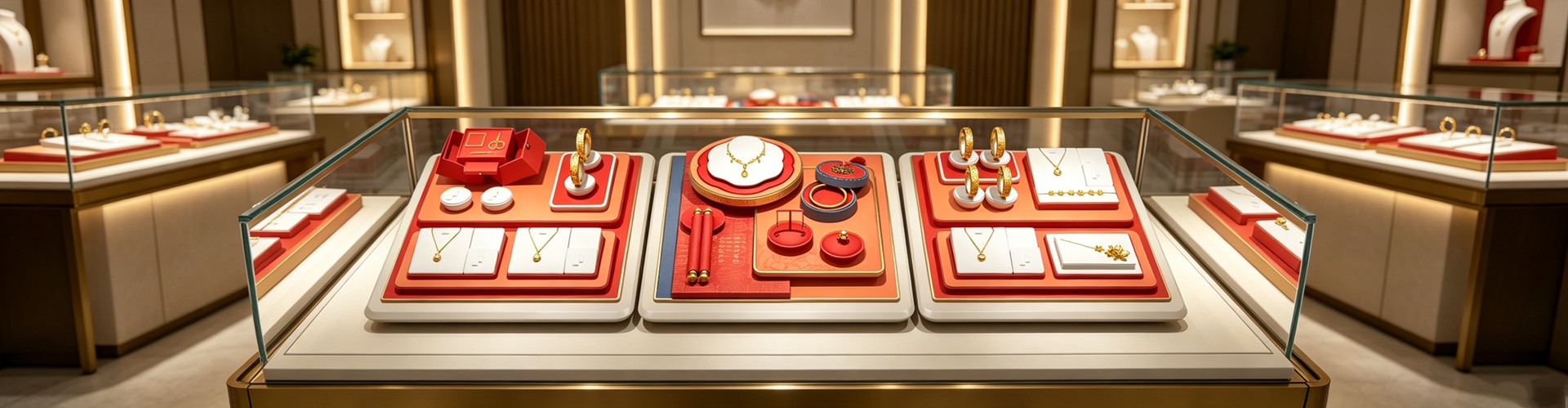
What the carpet also ignites is the appetite for provenance. Whether it is the traceability certificate behind a natural diamond or the maker's signature on an independent studio piece, 2026 buyers care more than ever about where a thing comes from and why it costs what it does. That pressure lands on the last mile of presentation: the certificate needs a home, the story needs to be printable, and the box needs to survive being opened a decade later. Jewelry packaging design thus upgrades from "protecting the metal" to "preserving the trust" - a clean mark, a precise deboss, a fixed slot for the paperwork often out-classes ornamental flourishes.
The red carpet you can carry out the door
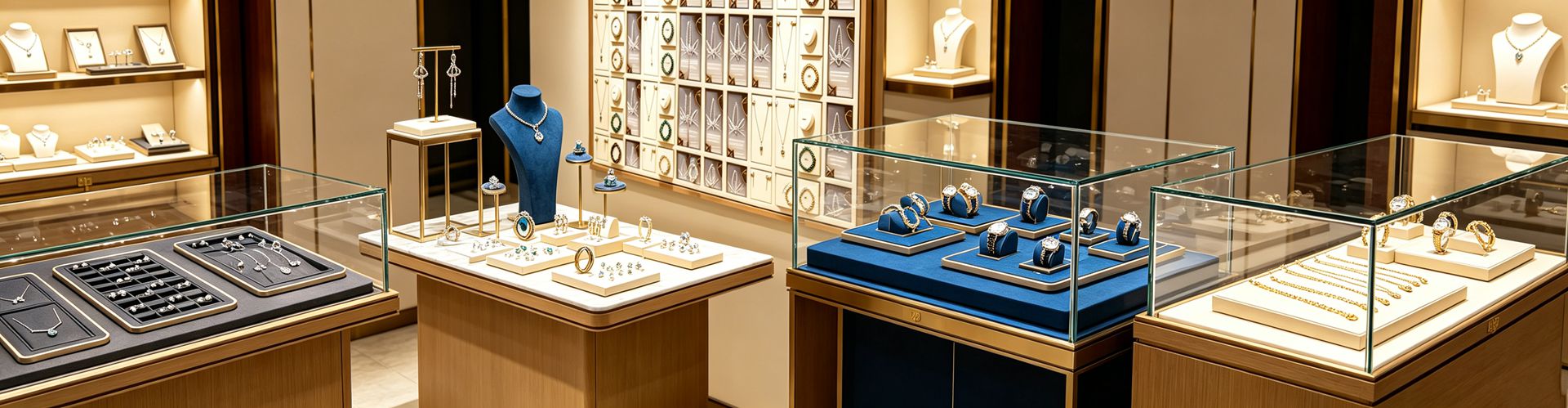
The red-carpet effect does not end on screen; it lands at the counter. When a client walks in expecting "the look she wore," what she really wants is a miniature red carpet of her own: lighting that reveals fire, a path that stops her in front of the hero piece, and a display that lifts "that one" to eye level. That returns the test to the most basic retail craft - jewelry display props and showcase plinths. The carpet is someone else's stage; the store's own stage is built with props. Get the hero spot, the try-on spot, and the comparison spot right, and a celebrity look becomes a sale instead of a screenshot.
And the "personal narrative" thread raises the bar for packaging. When jewelry starts carrying identity, the box cannot be merely a container. Limited capsules, celebrity-inspired pieces, and one-off commissions all call for custom jewelry boxes matched to their temperament - restrained matte surfaces, precise foil, a fixed slot for the certificate and serial number - so that the unboxing extends the red carpet's quiet line: "this is my choice." Quiet-luxury finishes are unforgiving: a blind deboss leaves no ornament to hide behind, so every fold edge and hinge must hold. Shenzhen Junyimei has spent years on exactly this discipline, moving the budget "from ornament to structural tolerance," with small-batch flexible sampling that compresses the distance from idea to shelf.
A caveat worth keeping. The red carpet is a signal, not a guarantee. Not every viral look sells: some are too tied to a single gown, a single body, a single evening to translate into a repeatable SKU. The houses that profit treat the carpet as a directional compass - read the silhouette, the finish, the attitude - rather than a copying brief. The lesson for the floor is consistency: build the stage, tell the story, and let the box carry it home, long after the photographers have left.
What retailers can actually do with the signal
The practical playbook is not to copy the carpet but to translate it. Stock a curated capsule of hero pieces with clear proportions, refresh hero imagery to mirror red-carpet necklines and sleeve lengths, and brief sales teams to speak the language of craft and finish rather than logo. Limited editions and small runs capture the short window of editorial attention; the brands that win are those whose supply chain can sample fast enough to be on shelf while the moment is still warm. Provenance documentation and bespoke personalization turn a fleeting headline into a repeat, high-ticket sale.
The carpet clears, the demand stays
Awards-season heat usually lasts only weeks, but the retail transmission is real. US jewelers' experience suggests that in the weeks after a major carpet, inquiries for solitaire rings, chandelier earrings, and vintage-inspired engagement rings climb noticeably; buyers adjust the season's SKU mix, front-loading pieces that "have presence, photograph well, and explain their craft." For smaller brands, the smarter move is rarely to chase every viral moment, but to train the supply chain to sample fast once a trend appears. Carpets come every year; the counters and boxes that can actually catch the traffic are the durable asset.
This is original content. Copyright belongs to Shenzhen Junyimei.
Junyimei - present every jewel and timepiece at its best.
红毯即秀场,珠宝才是主角
每年一月底到三月,全球珠宝行业都在悄悄等待一场没有主办方的发布会——颁奖季。金球奖、格莱美、演员工会奖、奥斯卡,一条红毯在几个小时内同时完成三件事:给明星定造型、给品牌做全球曝光、给零售端下季度的订单打样。2026 年的颁奖季尤其值得记一笔,因为它把过去几年"克制即高级"的潜台词,正大光明地改写了一回。
从"叠戴小心机"到"一戴定乾坤"
Jewelers Mutual 发布的 2026 珠宝趋势预测里,有一条耐人寻味的观察:往年的红毯靠"叠戴"取胜——把十几件小件堆出气势;而 2026 年的奥斯卡(3 月 15 日举行)几乎一边倒地转向"大而完整"的单件存在感。"珠宝要大、要亮、要能抓住并留住光线,"趋势专家 Emili Vesilind 这样总结。Elle Fanning 佩戴的复古 Cartier 钻石头冠、Priyanka Chopra 的 Bulgari 彩宝钻饰项圈、Teyana Taylor 的 Tiffany 古董钻石项链,都是这种"一件顶全场"逻辑的代表;曾被嫌老气的宝石胸针也杀回红毯,别在歌剧大衣上,也别在男星的领口。
这背后是一个被低估的商业信号。演员工会奖 2026 上,Tiffany & Co.、Messika、Repossi、Emily P. Wheeler、Pasquale Bruni、Chopard 同台竞技,传统世家与新一代设计师品牌首次在红毯上平起平坐。Kate Hudson 一身钻石超过 80 克拉,Jessie Buckley 却选了带古董灵魂的 Jessica McCormack 沙漠钻石——后者恰恰呼应了 2026 年另一股暗流:消费者要的不是"更闪",而是"更独特"。大胆的 statement 钻石如今相较经典切工约有 10% 至 15% 的溢价,热度集中在 2 到 5 克拉以上区间,高级定制更往上走。
"沙漠钻石"与自我奖赏
天然钻石行业把 2026 年定义为"从地位象征转向自我表达"的一年。NielsenIQ 今年三月发布的《2026 香港珠宝礼赠调查》显示,75% 受访者计划未来一年购买珠宝,其中 76% 首选天然钻石;更关键的是,55% 的人买珠宝首要目的是"奖励自己",而非礼赠。另有 72% 的受访者认为fine钻石应当日日佩戴而非锁进保险柜——这是对"藏起来才珍贵"心态的一次安静拒绝。当珠宝从"等待被送的礼物"变成"证明自我价值的徽章",明星红毯上那些带着个人叙事的佩戴,反而比任何广告都更有说服力。
印度市场把这套逻辑跑得更彻底。宝莱坞颁奖礼(Filmfare、IIFA)一过,次日相关钻石耳环的谷歌搜索量就直线上升;2026 年 2 月 26 日 Vijay Deverakonda 与 Rashmika Mandanna 的世纪婚礼,几乎让全印度同时开始搜索他们佩戴的庙宇珠宝。红毯在这里不再只是橱窗,而是完整的购买漏斗——看见、搜索、进店、定制。曾经被质疑"是不是真的"的培育钻石,如今也坦然走上全球红毯,包括 2025 时尚大奖上随处可见的身影;在印度,Vaani Kapoor、Dia Mirza 等明星把它当作可持续立场而非付费摆拍。
社交平台把红毯的半衰期拉得更长。一条获奖红毯造型,几小时内就能在 Instagram、小红书、抖音上裂变成数千万次曝光,并直接转化为电商搜索与进店问询——红毯于是从一夜的秀,变成持续数周的流量入口。对品牌来说,真正的考题随之而来:当流量涌进门店,你的陈列、你的讲解、你的包装,能不能接住这股被明星点过的火?
带得走的红毯,得有几样硬功夫
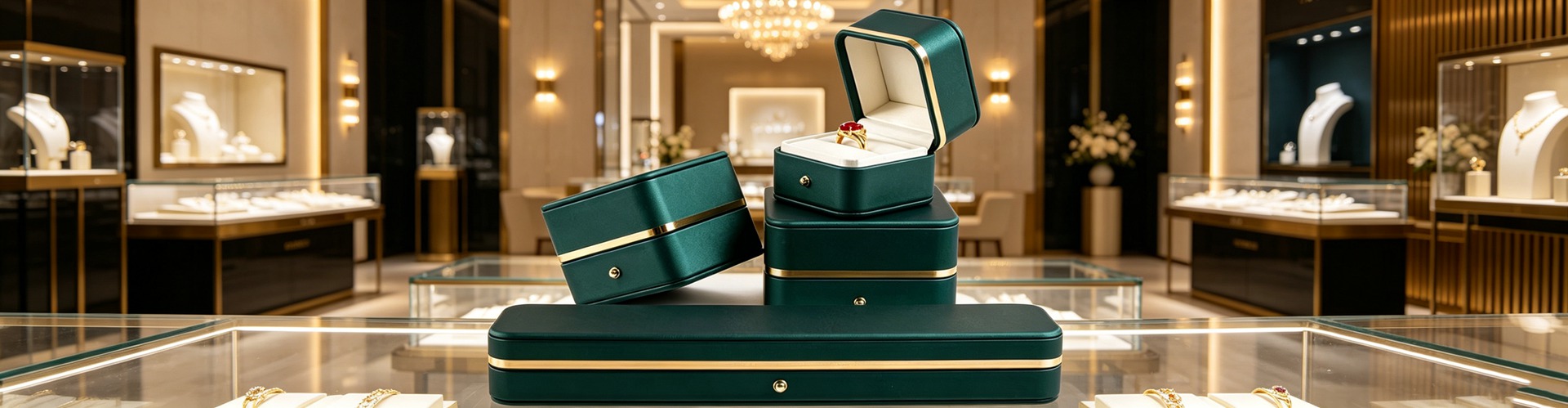
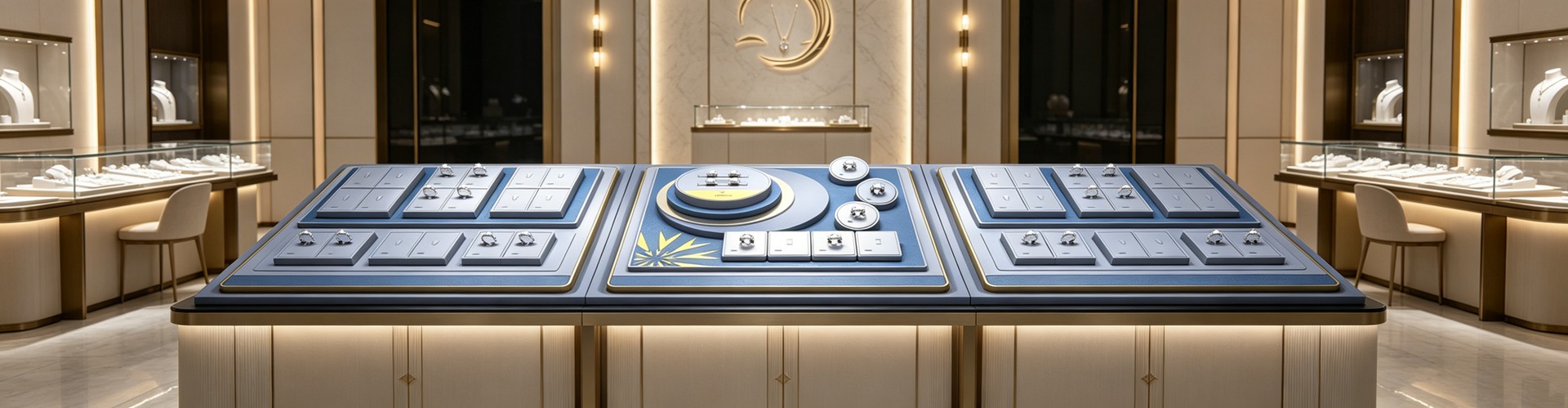
红毯效应的终点不在屏幕,而在柜台。当一位顾客带着"想要明星那款"的预期走进门店,她要的其实是一场微缩版红毯体验:灯光要能照出火彩,动线要让她自然停在主角前,陈列要替她把"那件"举到眼前。这就把考验交还给了最朴素的零售基本功——珠宝陈列道具与首饰展台。红毯是别人的秀场,门店自己的秀场得靠道具搭起来;把高光位、试戴位、对比位做对,才能让"明星同款"从一张截图变成一次成交。
而"个人叙事"这条主线,又对包装提出了新要求。当珠宝开始承载身份表达,盒子就不能只是容器。限量胶囊系列、明星灵感款、一对一定制,都需要与之气质匹配的珠宝盒定制——克制的哑光、精准的烫印、为证书与编号留的固定位,让拆盒那一刻延续红毯上那句"这是我的选择"。深圳骏依美这些年做的就是这套"把预算从花纹挪到结构公差"的功夫,小批量柔性打样,让一个新款从想法到上柜的周期被压到最短。
红毯带火的还有"可讲清来历"这件事。无论是天然钻石的溯源证书,还是独立设计师的手作署名,2026 年的消费者比任何时候都更在意"这件东西从哪来、凭什么贵"。这把压力传导到呈现的最后一公里——证书要有安放处、故事要印得出来、盒子要经得起十年后再次打开。珠宝包装设计因此从"保护金子"升级为"封存信任":一枚干净的标识、一处精准的烫印、一个为证书留的固定位,往往比繁复的花纹更能撑起高级感。
红毯会散场,需求留下来
颁奖季的热度通常只维持几周,但零售的传导是真实存在的。美国珠宝商的经验是:在红毯后数周内,单石戒指、吊灯耳环、复古风订婚戒的问询会明显走高;买手会据此调整当季 SKU 结构,把"有存在感、能上镜、讲得清工艺"的款提前备好。对中小品牌而言,与其追每一个爆点,不如把供应链练到"看见趋势就能快速出样"——毕竟红毯年年有,能接住流量的柜台和盒子,才是自己的长期资产。
本文为原创内容,版权归深圳骏依美所有,转载请注明出处。
骏依美——让每一件珠宝与腕表,都被更好地呈现。